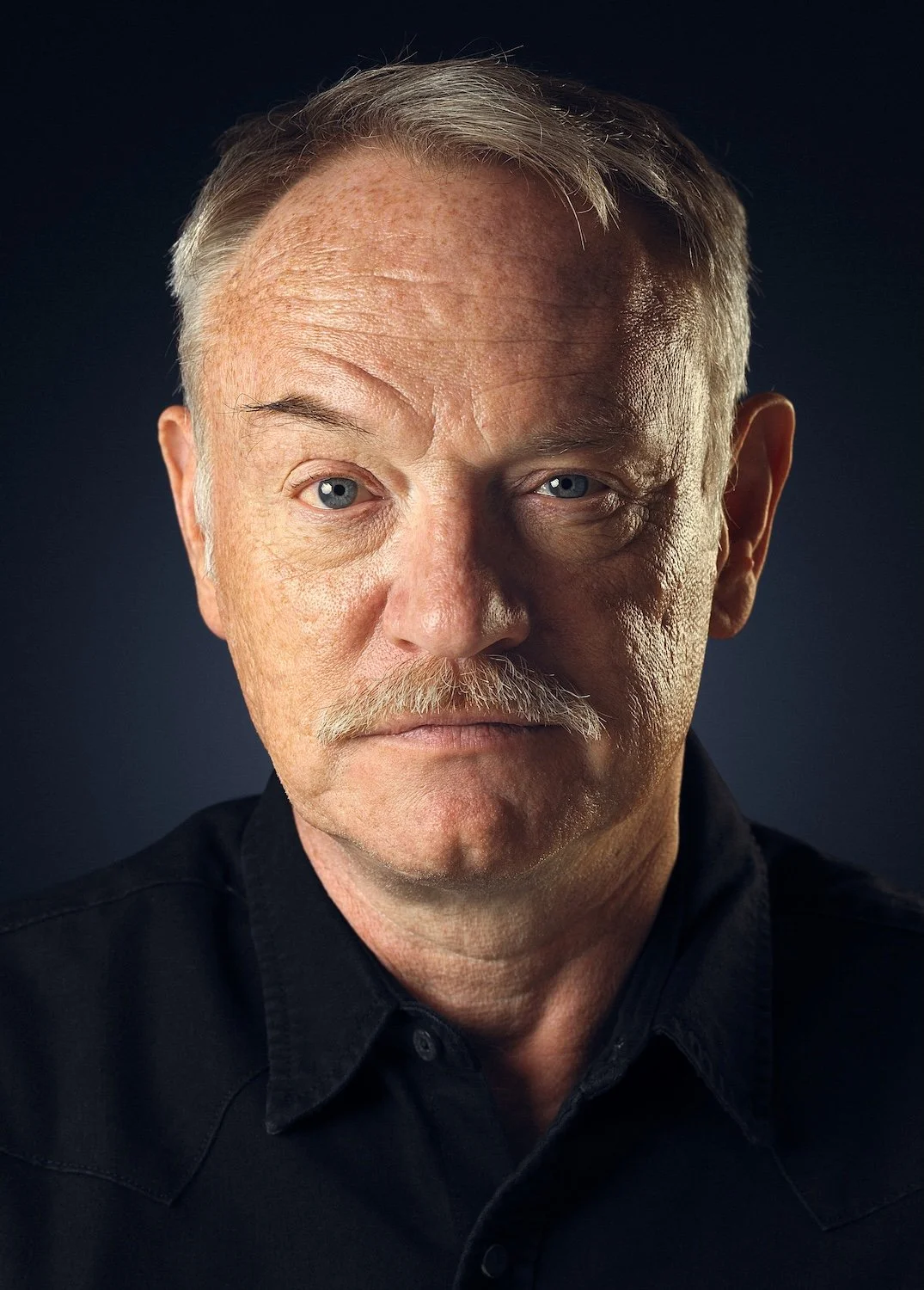
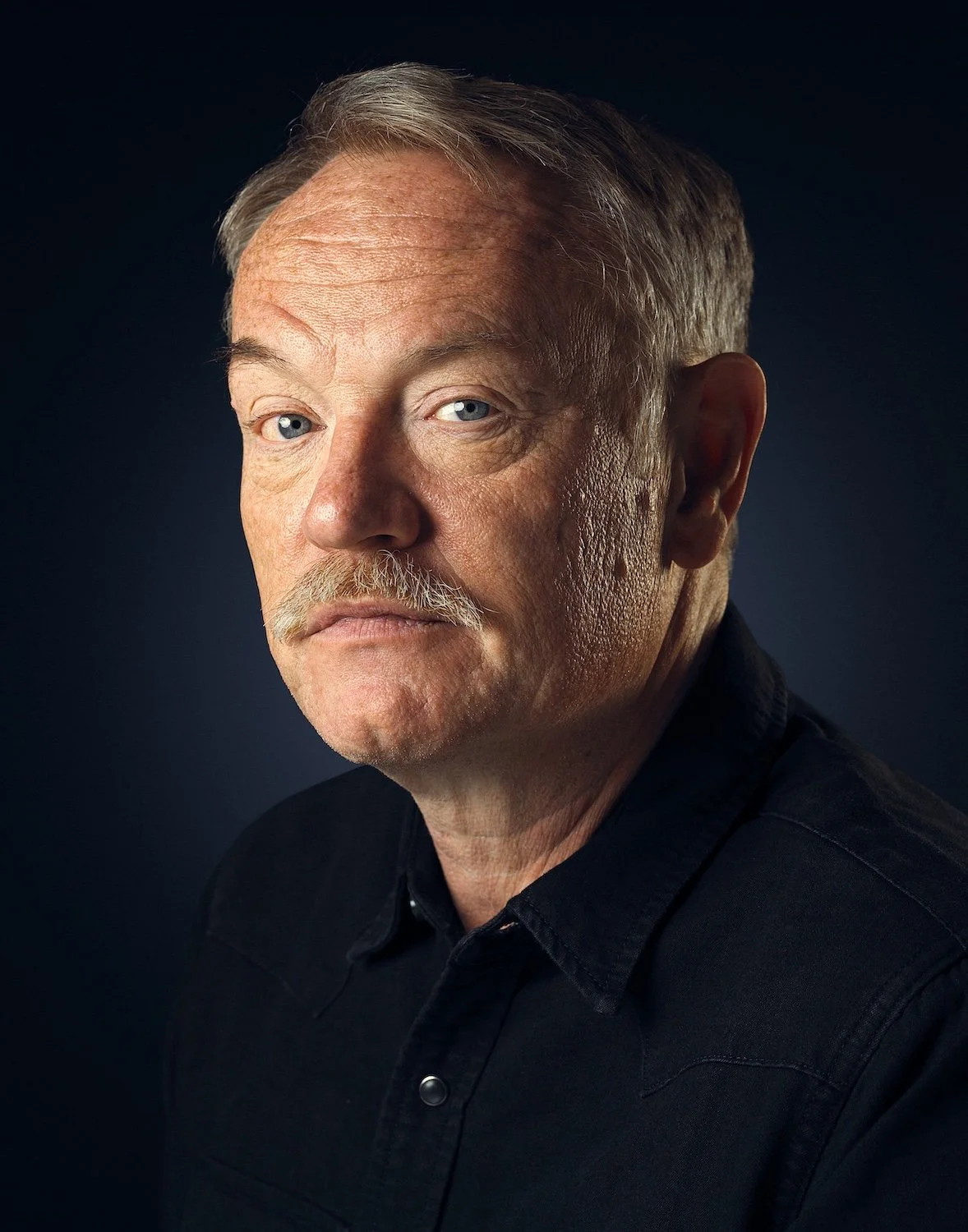
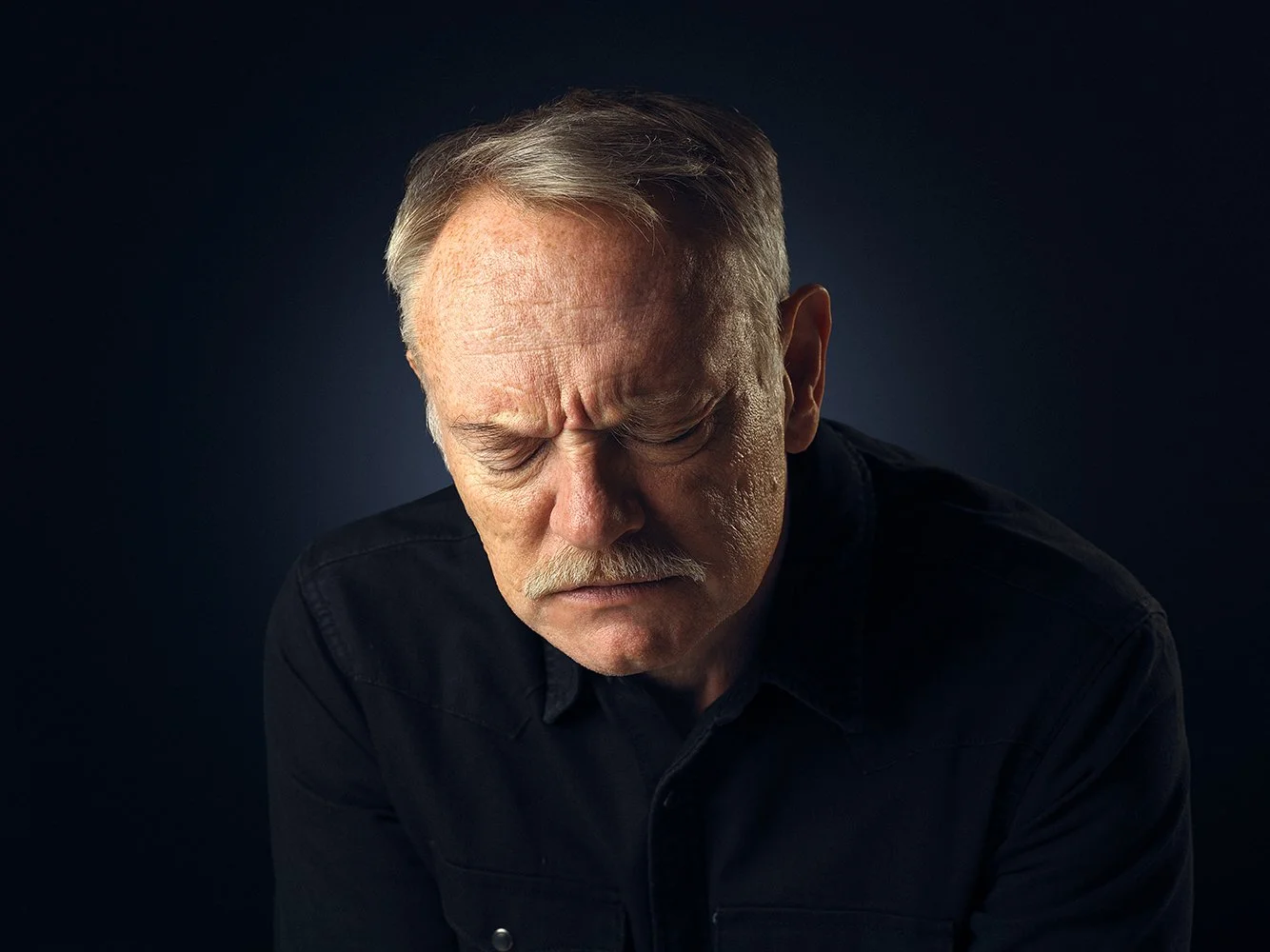
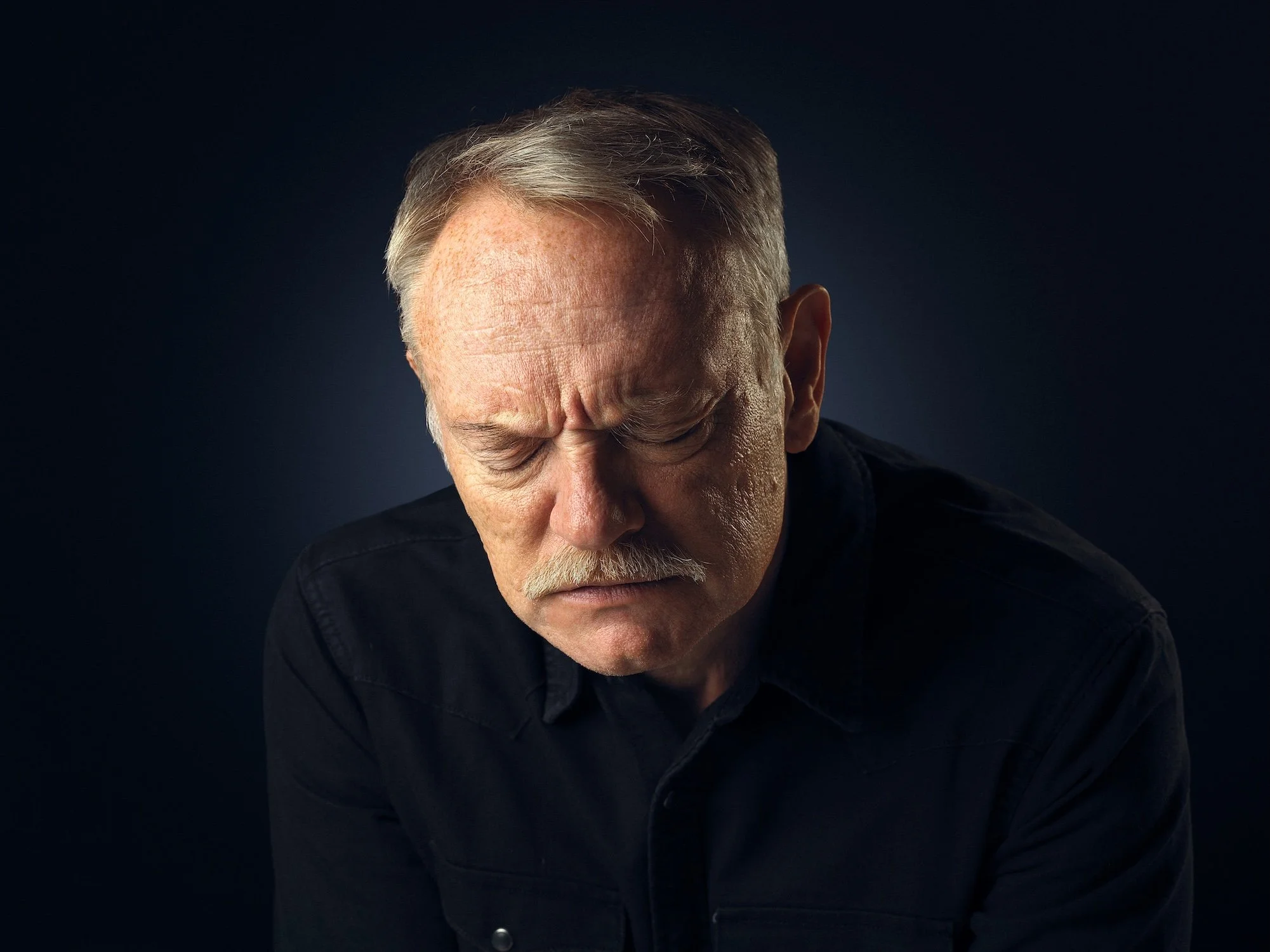
Three years from the first email to the shutter releasing. Jared and I had been trying to find a window for this sitting since before the pandemic, and the dates kept slipping — shooting schedules, travel, the world generally not co-operating. When we finally sat down in the London studio in August 2022, the wait had become its own kind of preparation.
He's the right sitter for Selah. The series is built around stillness — sitters held in a single light, given time and quiet, photographed in a register closer to Rembrandt than to a contemporary headshot. Harris already works in that register on screen. His best performances — Hari Seldon in Foundation, Valery Legasov in Chernobyl — are studies in restraint, in the face doing more than the dialogue. There is a stillness available to him that most actors don't reach for. The portraits we made in this session are an extension of that, not a depiction of it.
We worked slowly. One light, painted backdrop, the room kept small. The classical painters I keep returning to for Selah— Caravaggio, Ribera, Titian — built their portraits over hours and days, watching the sitter settle into themselves. There is no time-travel from a digital camera, but the principle holds: stay in the room long enough that performance falls away, and what's left is the man.
He didn't have to be coached into that. He arrived already in it. The portraits aren't about Hari Seldon, or any of the parts; they're about the man between the parts. That was always the brief.
A small, considered set of frames. Three years was, in the end, about right.