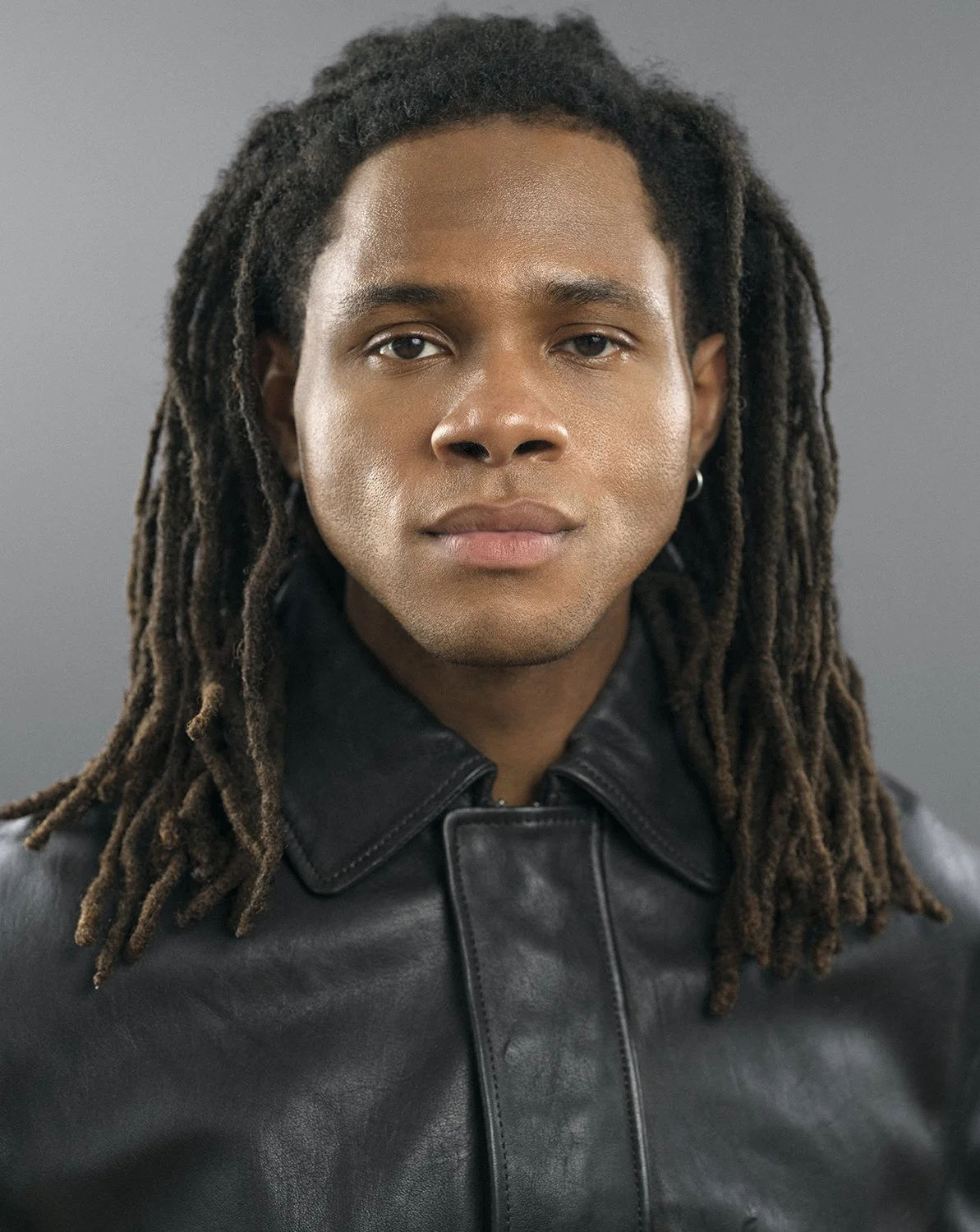
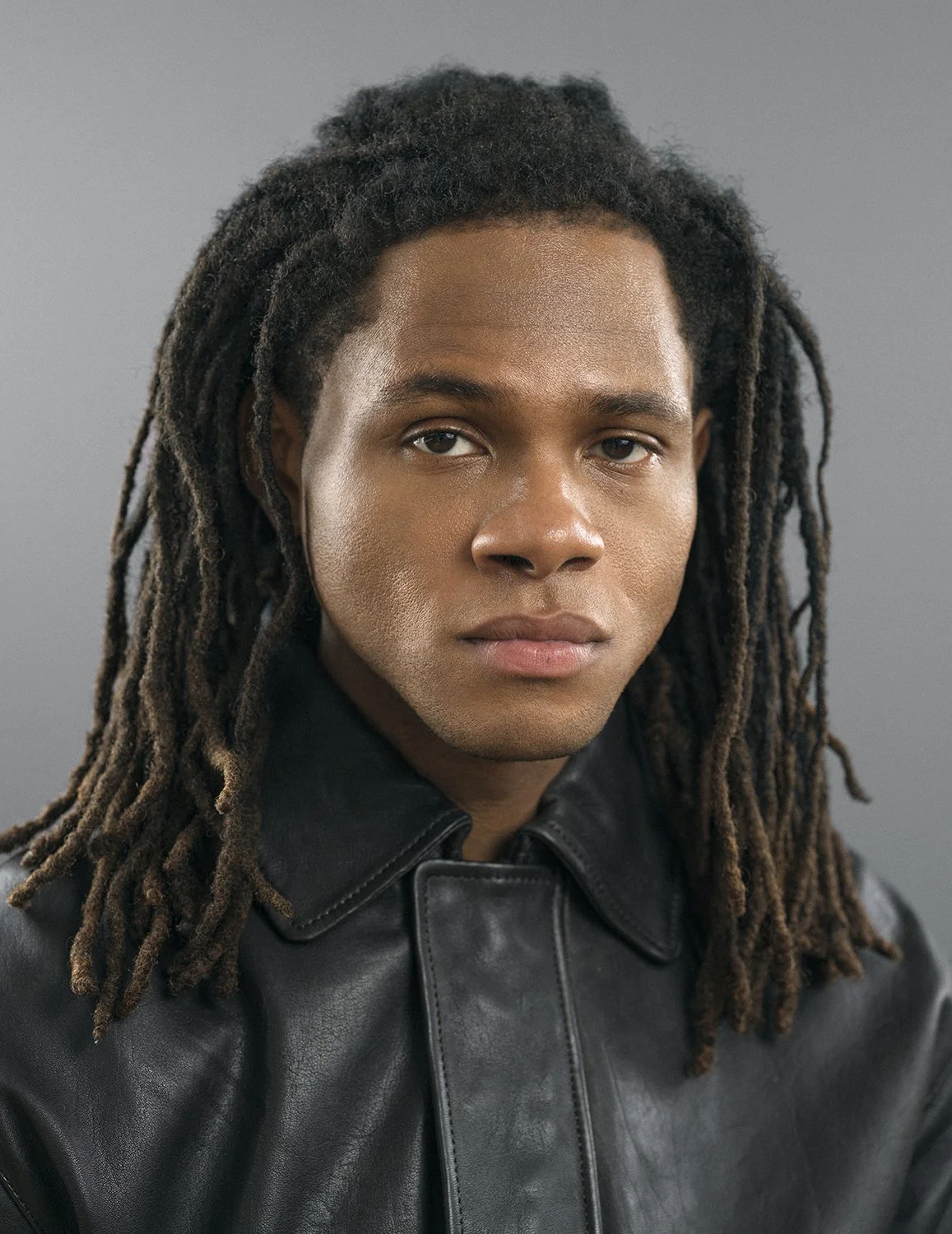
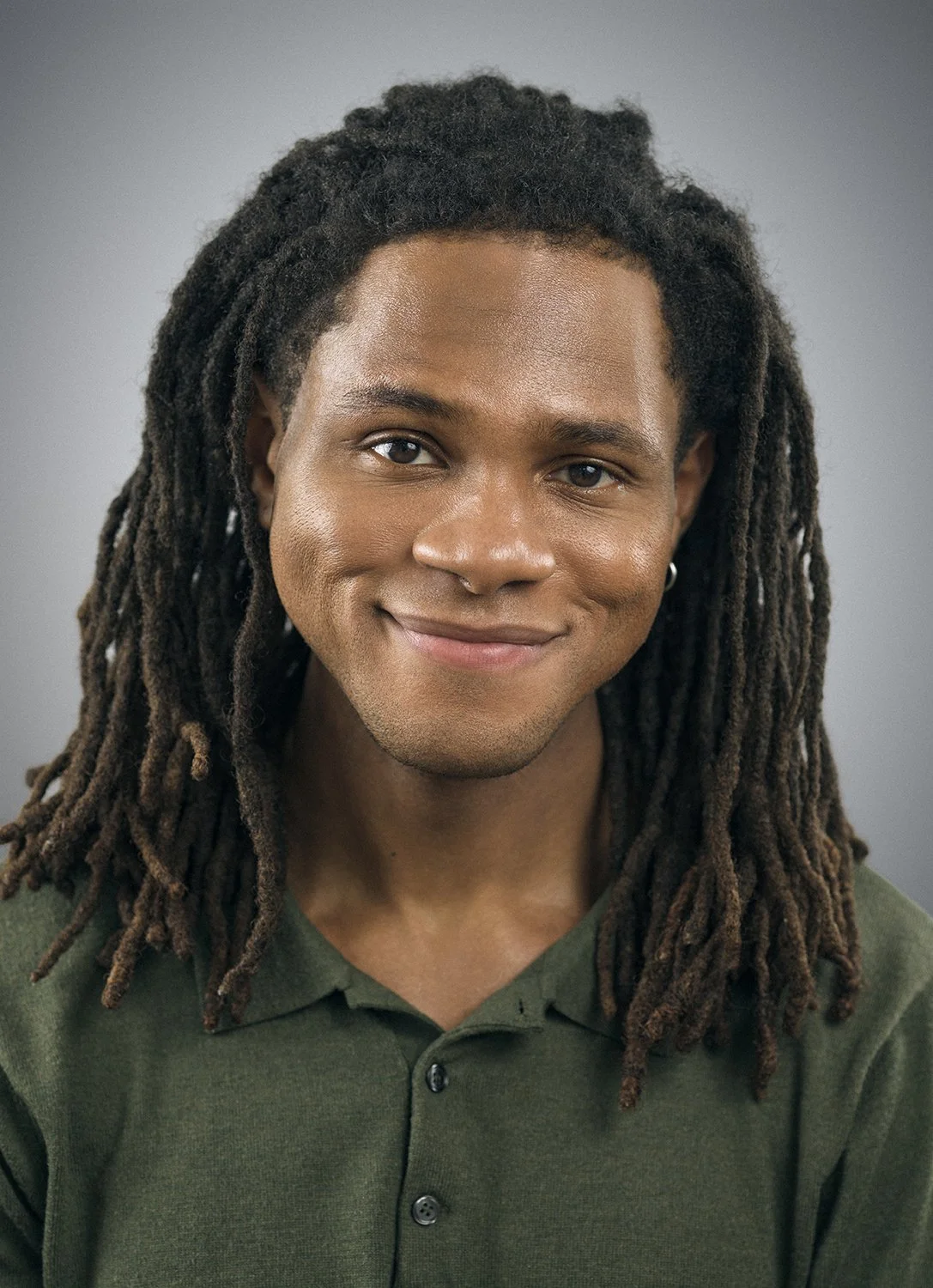
This session was focused, deliberate, and stripped back to essentials.
My approach to headshots has always been about removing anything that distracts from the actor. No unnecessary styling, no visual noise, no overworked lighting setups. Just a controlled environment where performance can emerge naturally. The lighting is precise, designed to sculpt rather than overwhelm. The background is clean. Every decision is made to keep the viewer’s attention exactly where it should be—on the eyes, on the expression, on the truth of the moment.
What makes the difference is direction.
Actors are not left to “find it” on their own. Every shift in expression is guided—subtle changes in posture, breath, and eye-line that transform the read of an image. A fraction softer and the image becomes open and commercial. A fraction more controlled and it moves into something more guarded, more dramatic. These are small adjustments, but they are everything.
With Cordell, the range came quickly.
We began with openness—an ease in the face, a natural connection that immediately feels accessible. The kind of image that invites a casting director in. From there, we moved toward stillness. The expression tightened, the energy became more contained, and the gaze carried more weight. Finally, we pushed into a more cinematic space—minimal expression, controlled intensity, and a sense of underlying tension.
None of it forced. None of it artificial.
Just different facets of the same actor, revealed with clarity.
That is ultimately the purpose of a headshot session—not to create multiple versions of a person, but to reveal the range that already exists within them.
Returning clients like Cordell understand this. They’re not looking for something radically different each time. They’re looking for something more precise. More aligned with where they are now in their career. Headshots are not static—they should evolve alongside the actor, reflecting both growth and direction.
The result from this session is a set of images that feel clean, direct, and honest. Casting-ready, but elevated. Cinematic, but never distracting. Each frame communicates something specific, and does so immediately.
Because in the end, that’s what matters.
A headshot has a fraction of a second to hold attention.
And when it works, you don’t question it.
You simply believe it.