Working with the 2nd Battalion, Royal Gurkha Rifles stands as one of the defining highlights of the Soldiery project, produced through the Rory Lewis Non-Profit. While many civilians have a general awareness of the Gurkhas, few fully understand the depth of tradition, discipline, and identity that defines this extraordinary regiment.
Distinct among British Army units, the Royal Gurkha Rifles carry no flag or pennant. Instead, their battle honours are worn on the chest belt—an austere and deeply symbolic expression of service. During these sittings, I was honoured to photograph one of the regiment’s most sacred ceremonial objects: The Queen’s Truncheon, presented in 1863 in recognition of unwavering loyalty and service to the Crown. Its presence speaks quietly but powerfully to nearly two centuries of shared history.

The Queen's Truncheon, 2nd Battalion Royal Gurkha Rifles (Rory Lewis Military Portrait Photographer)
Gurkhas are inseparable from the khukuri, the forward-curving Nepalese blade synonymous with their fearsome reputation. Examining the khukuri at close quarters underscored its brutal practicality—an implement still carried and used by Gurkha soldiers in modern conflicts, including Iraq and Afghanistan. As Sam Manekshaw, former Chief of the Indian Army, famously observed:
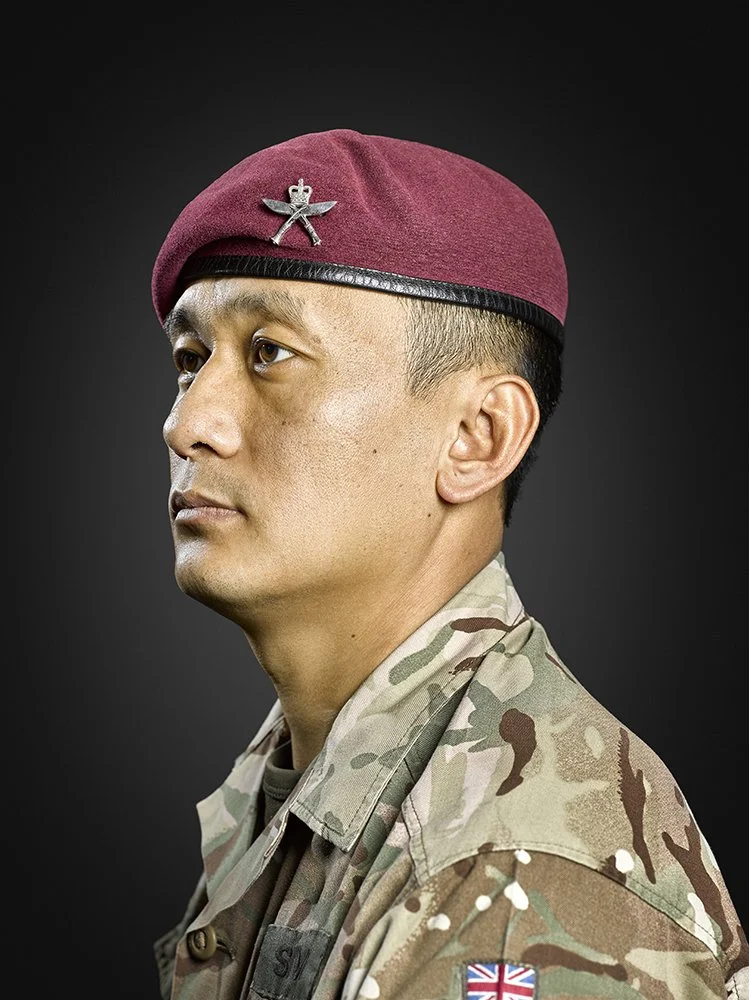
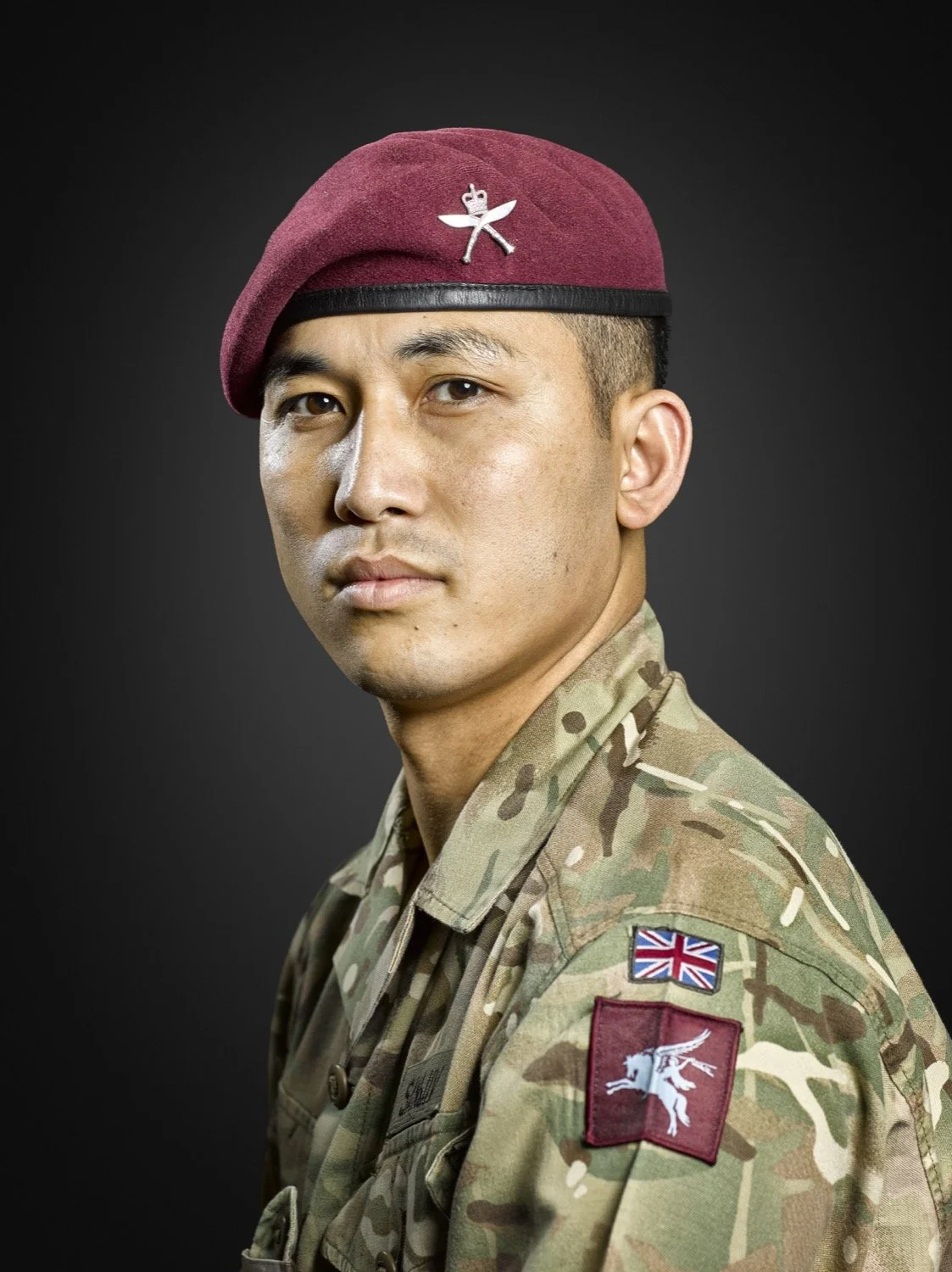
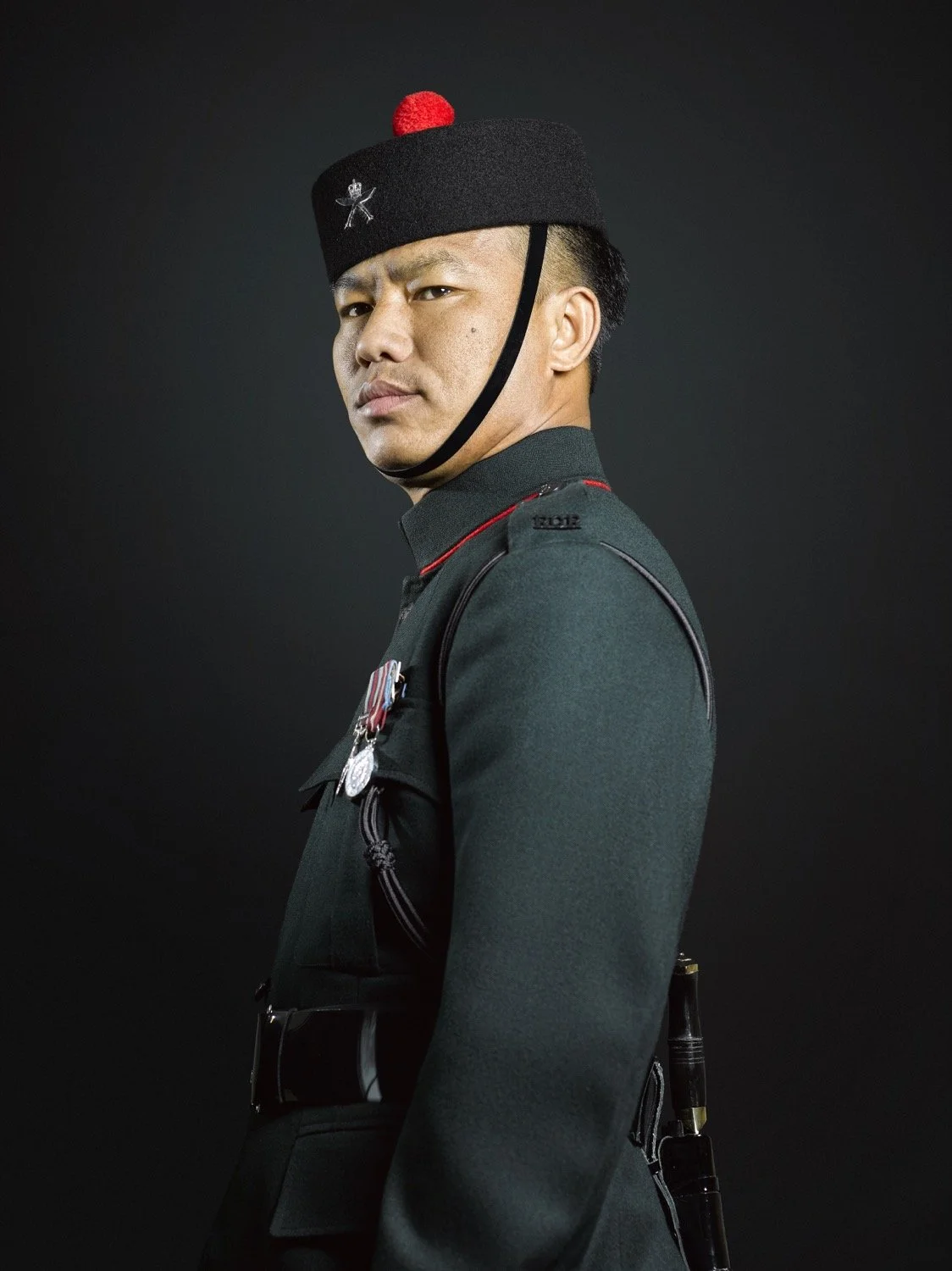
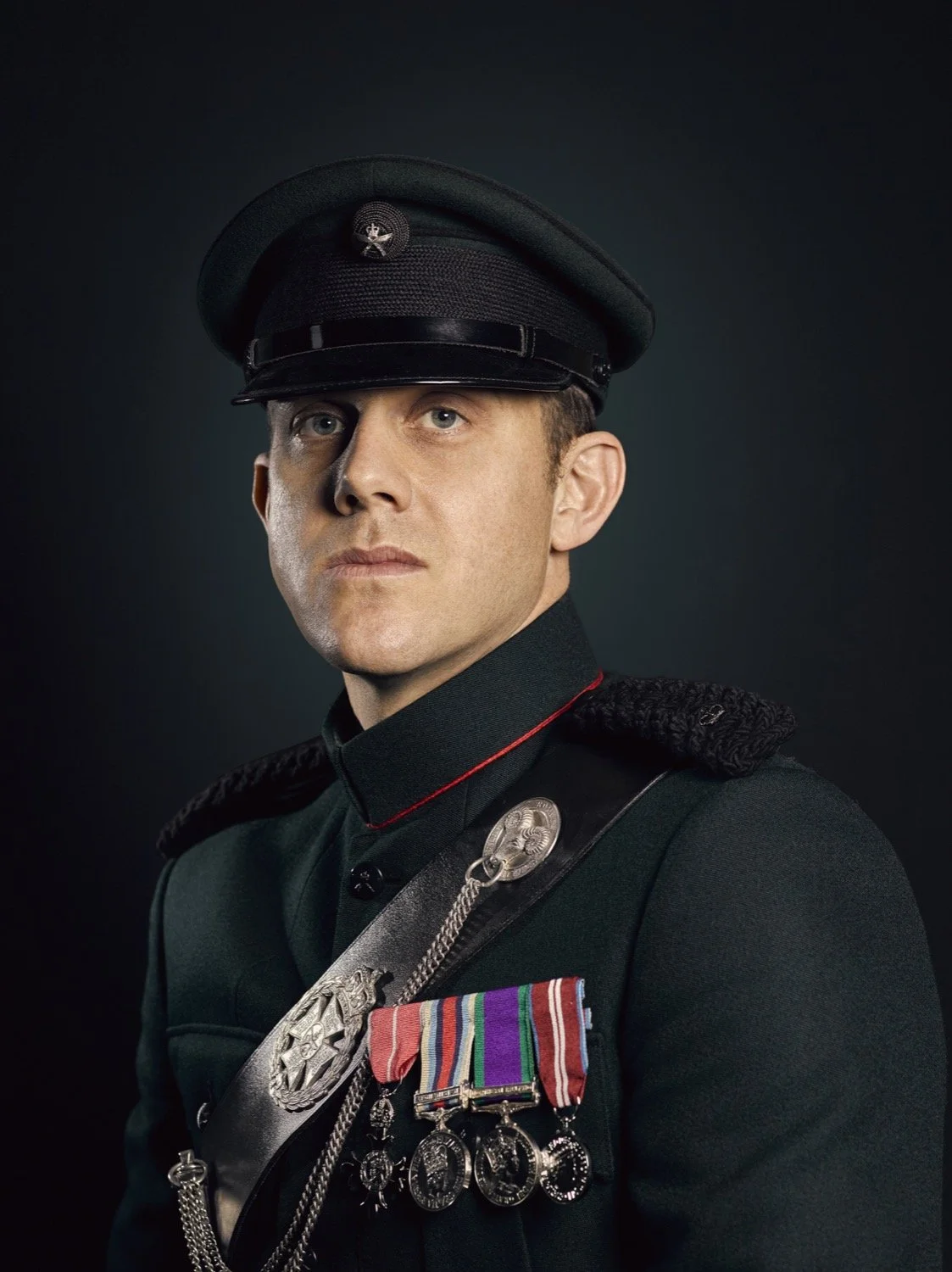
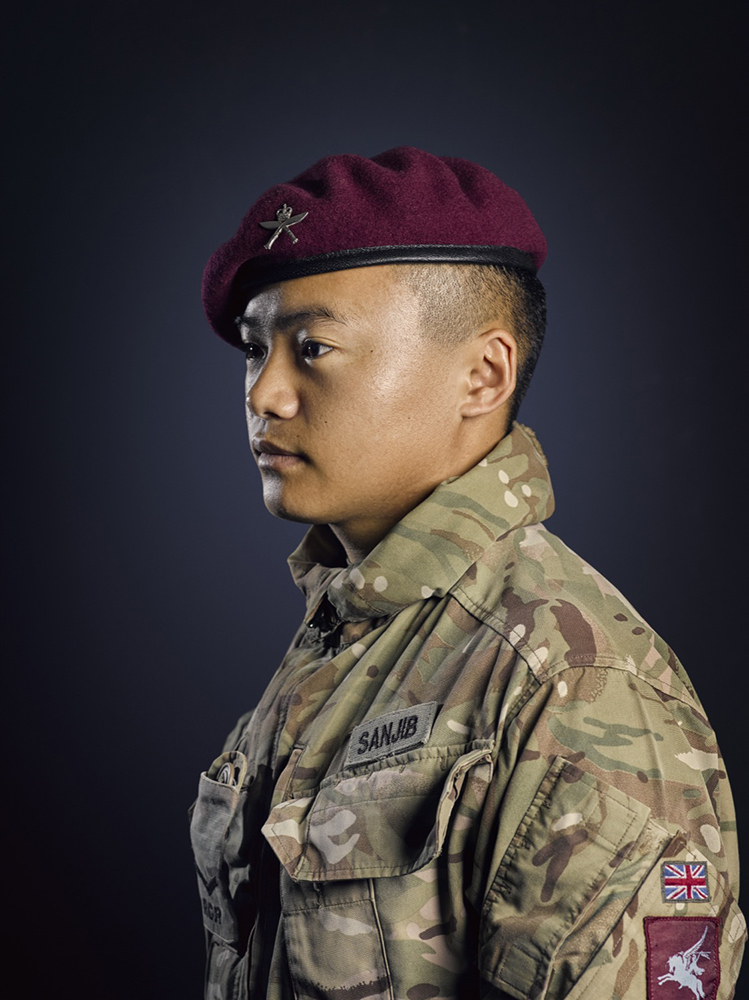
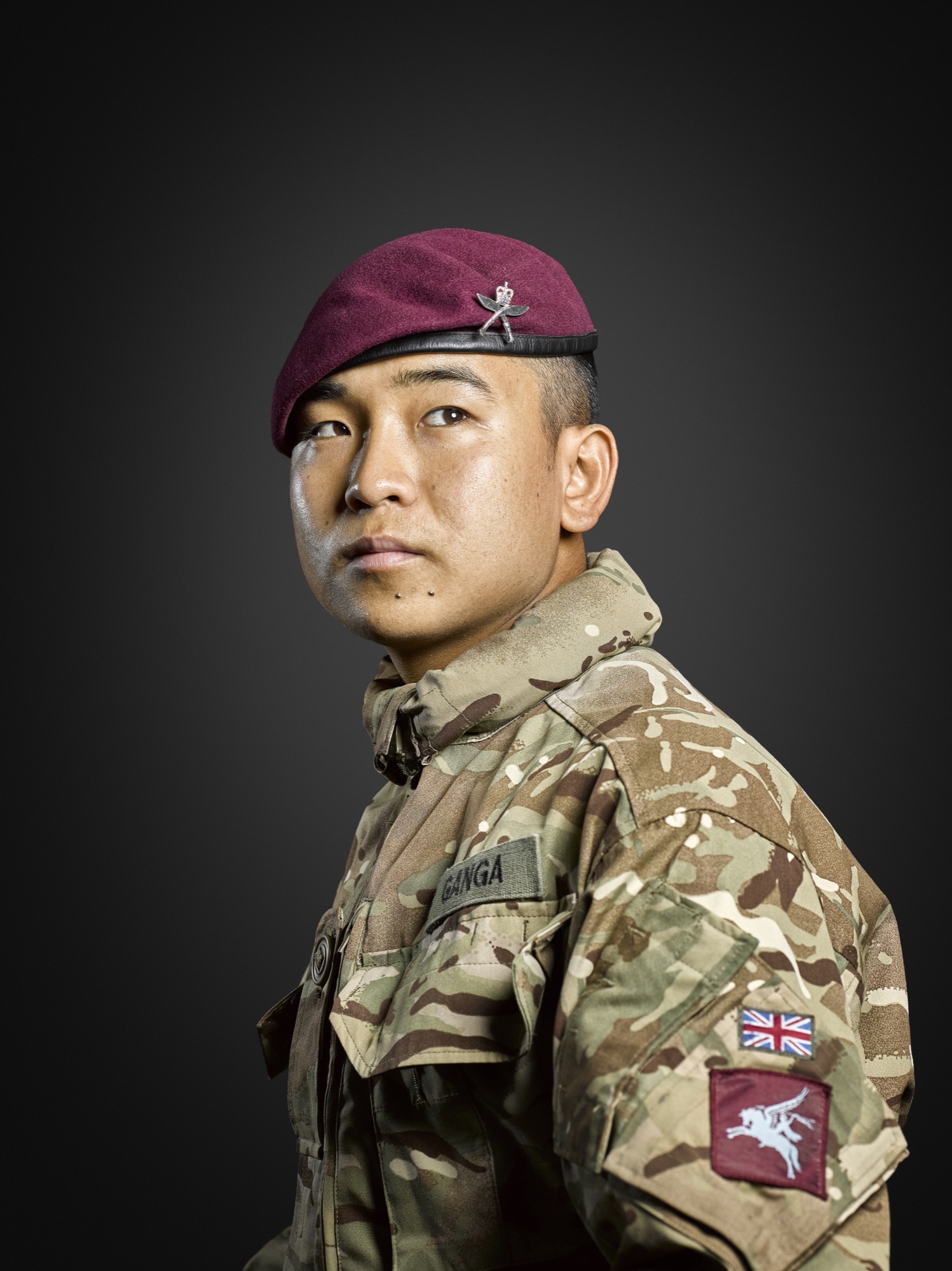
“If a man says he is not afraid of dying, he is either lying or he is a Gurkha.”
The regimental motto—“Better to die than be a coward”—is not rhetoric, but a lived ethos.