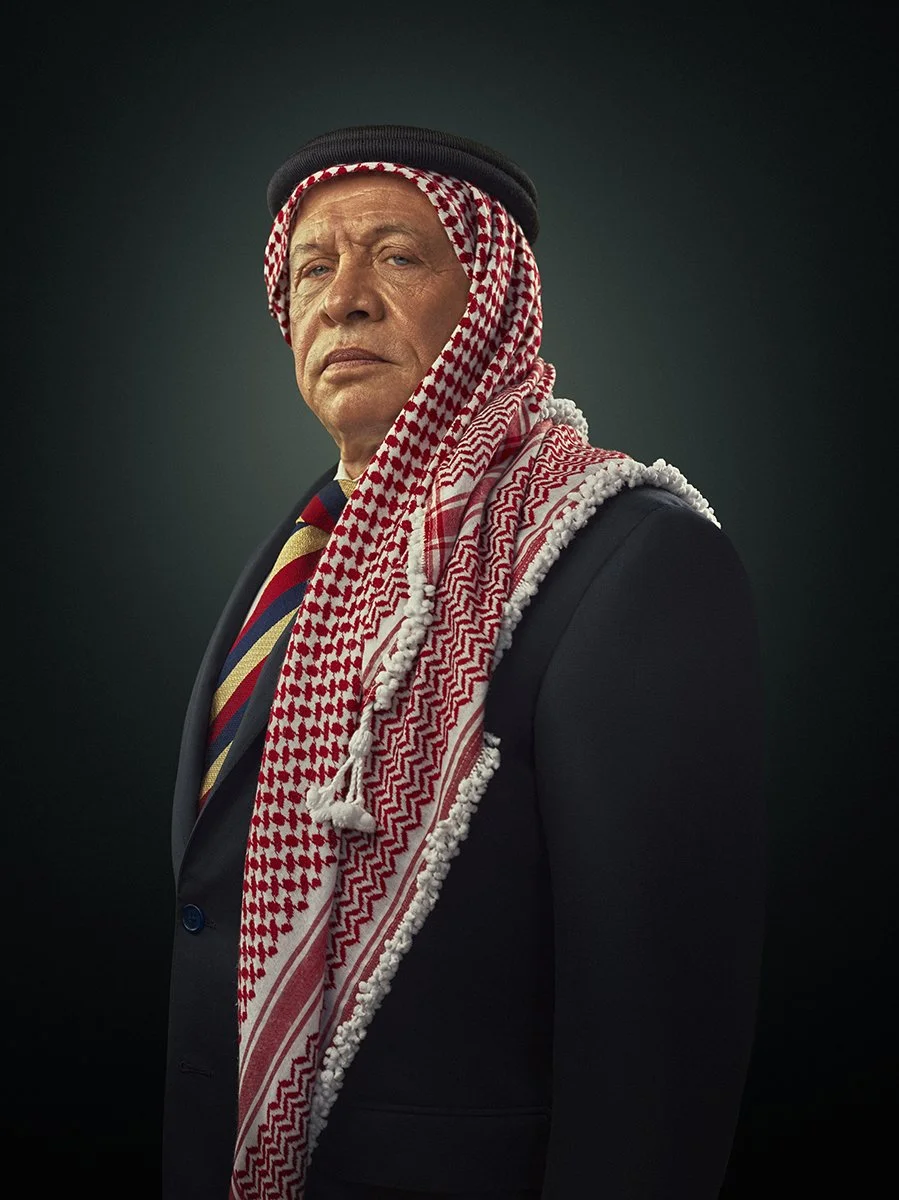
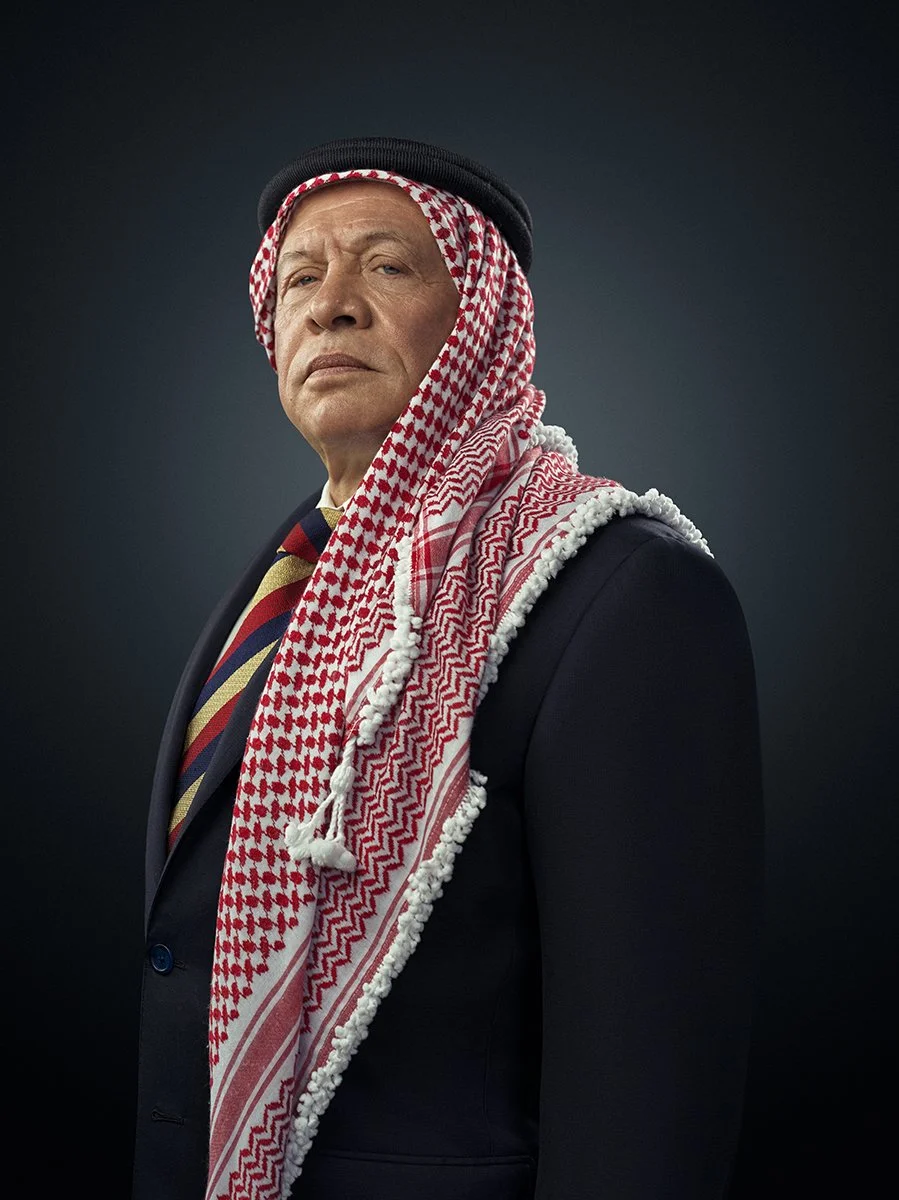
Photographing His Majesty King Abdullah II of Jordan, Colonel-in-Chief of The Light Dragoons

There is a particular quality of light inside the keep at Richmond Castle. It falls from high, deep-set openings through stone that has stood since the eleventh century, and it arrives cool, directional, and entirely indifferent to the century you happen to be working in. It is the sort of light a painter would have walked a hundred miles to find. On Sunday I found it waiting for me, and I photographed a king beneath it.

It was the first time I have photographed a reigning monarch.
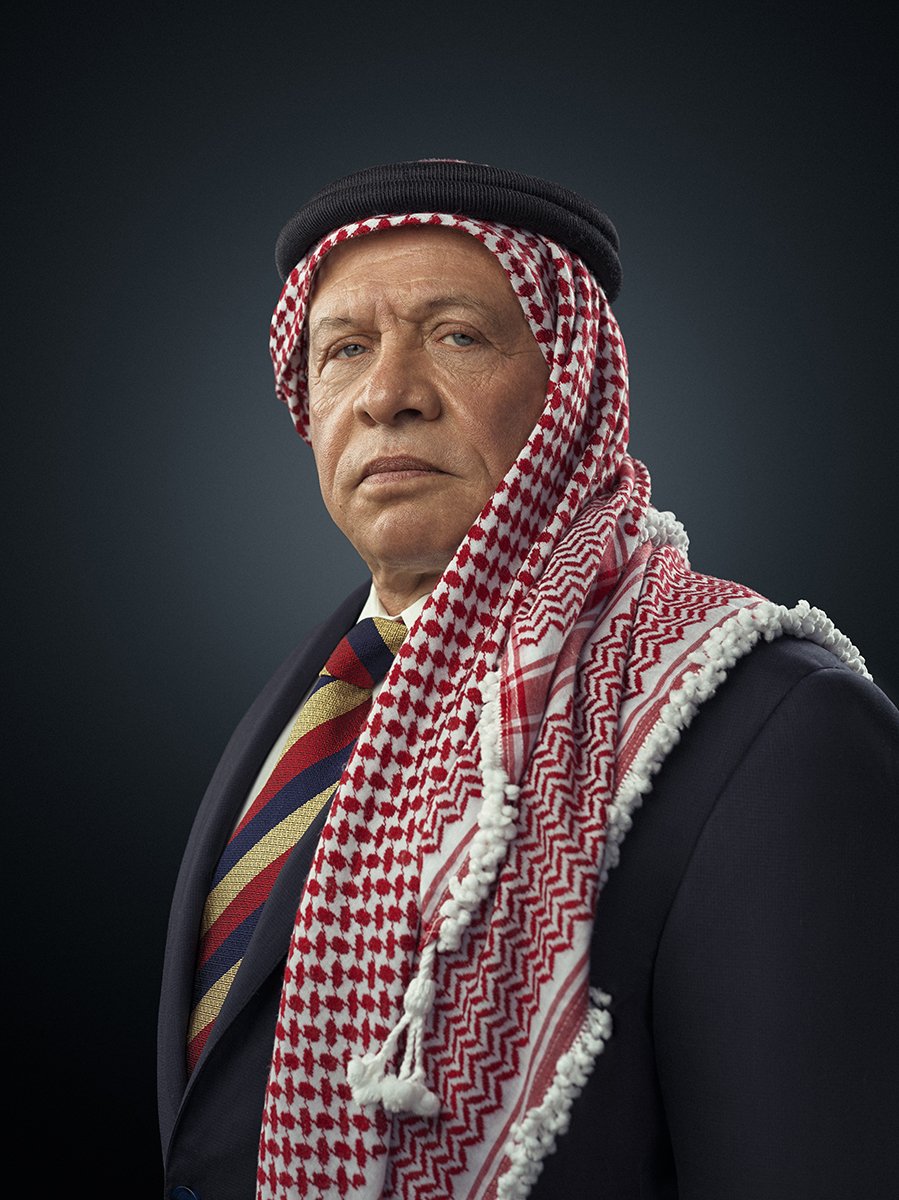
The occasion was the presentation of a new guidon to The Light Dragoons by His Majesty King Abdullah II of Jordan, their Colonel-in-Chief. I had been commissioned by the regiment, and I spent the afternoon watching a ceremony that has changed remarkably little in its essentials for three hundred years: the ranks drawn up, the new guidon carried forward and consecrated, the speeches, the march past. Uniform, silver, drum and hoof. A regiment receiving its colours is one of the few surviving pieces of theatre in British life that is not performed for an audience β€” it is performed for the regiment itself, and for the men and women whose names are stitched into the battle honours. To stand at the edge of it with a camera is a privilege that does not dull with repetition.

The sitting itself came afterwards. I had set up in the keep β€” a plain, dark ground, the light shaped and controlled, nothing between the subject and the lens but the space in which the two of you agree to work. His Majesty came in wearing a dark suit with the regimental tie, and the red-and-white shemagh over his shoulders. I have thought a good deal since about how completely that single garment does its work in the frame. It carries the whole weight of Hashemite identity into a photograph that is otherwise entirely European in its grammar β€” the three-quarter turn, the raking key light, the darkness closing behind the shoulder. Titian would recognise the construction. The shemagh would have astonished him.

He gave me his time and he gave me his attention, which are not the same thing and are not always both on offer. There is a stillness in men who have spent their lives being looked at. You cannot manufacture it, and you cannot rush it. You wait, and if you are fortunate, it arrives.

I presented His Majesty with an album of my work β€” the Soldiery archive, the portraits of Field Marshals and Generals and the soldiers who serve under them. He looked through it properly, which is more than one dares hope for. And then the afternoon took an entirely unexpected turn, because it emerged that the King is a devoted admirer of Star Trek. I showed him my portraits of Sir Patrick Stewart, and he remarked, with some amusement, upon his own appearance in the franchise some years ago. There is no dignified way to describe standing in a Norman keep in North Yorkshire discussing Starfleet with a Hashemite monarch, so I shall simply record that it happened, and that it was one of the more delightful conversations of my professional life.

I have been thinking about George Dawe. In 1819 Dawe was travelling in the suite of the Duke of Kent when he was noticed by Tsar Alexander I, and he went on to spend nearly a decade in St Petersburg painting the Military Gallery of the Winter Palace β€” three hundred and twenty-nine portraits of the Russian generals of the Napoleonic Wars, hung together in one long room so that a nation could look its own defenders in the face. It is the single greatest act of military portraiture ever undertaken, and it began with one artist being seen by one sovereign at the right moment.

I make no comparison of talent. But the tradition is the thing: the painter, and then the photographer, travelling to where the soldiers are, making the record, and leaving it behind for the archive. That is what Soldiery has always been for, and it is what Heroes in Focus now exists to continue.

His Majesty's aides asked for my details before I left. So did a member of the Jordanian press. Whether anything follows from that, I have no idea. But the album is in his hands, and the frames are made.

A last note, in the interest of honesty. I flew in from Los Angeles on Monday and have been fighting the jet lag ever since. I spent the night before the shoot in a room above a pub in Richmond, and the pub β€” being a pub, and being Yorkshire β€” was in no hurry to close. I was awake until midnight and running on very little by the time I set up in the keep.

Nobody tells you that part. The photographs look serene. The photographer was held together with strong tea and adrenaline.