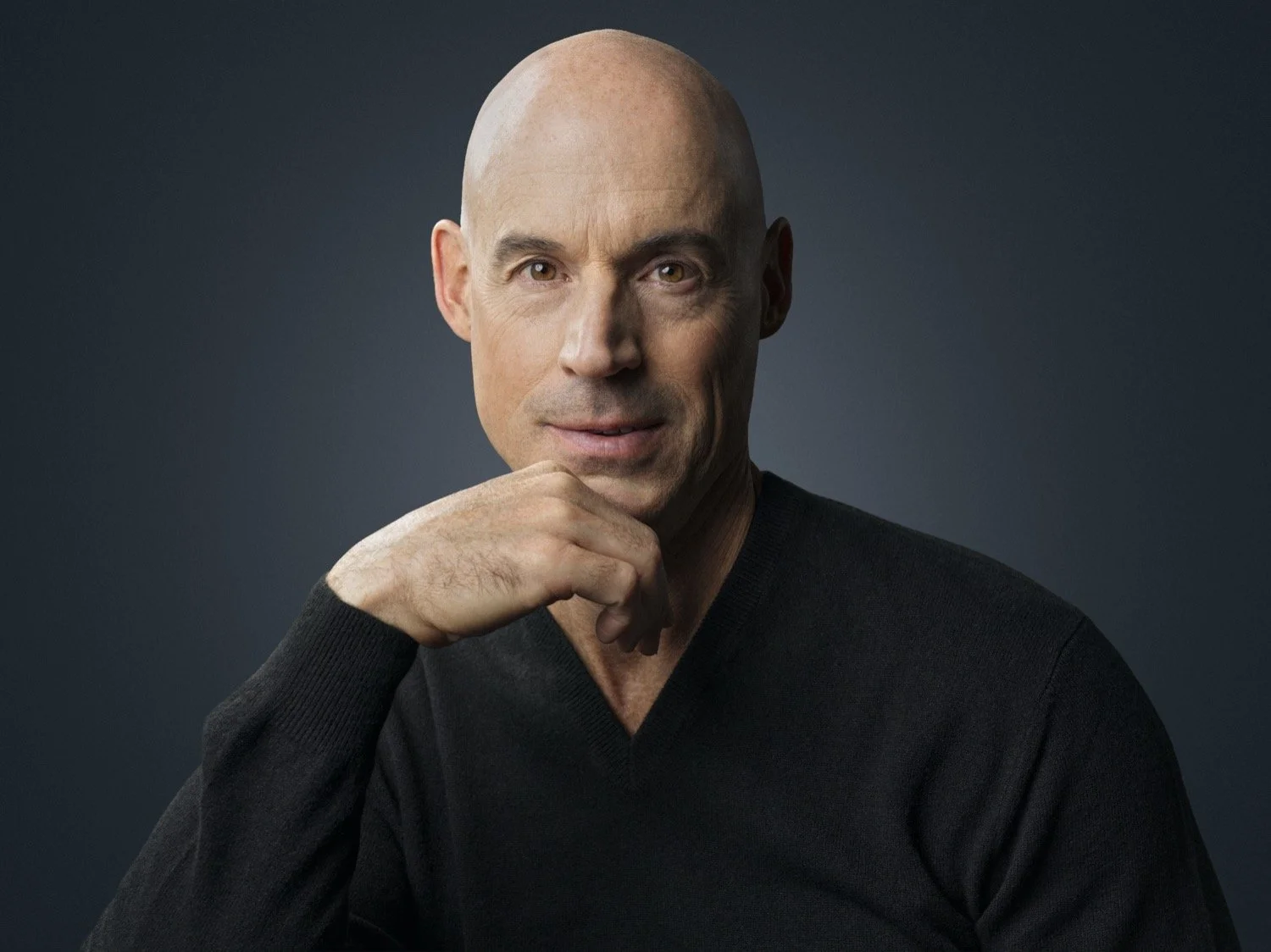
Bob Johnston sat for me in Los Angeles last month. He is the founder and chief executive of Exec.org, and his working life is built on introductions: putting a chief executive in front of the person who can move the thing along, a company in front of capital, a board in front of the director it did not know it needed. He also sits as an independent director and on audit committees, which is a different discipline again, and a quieter one.
A man in that trade has a particular problem with photographs. Almost nobody meets him cold. By the time he walks into a room, his picture has already been in it for a week, sitting in an email footer or at the top of a biography that somebody skimmed on the way to the meeting. The photograph is doing the introducing. It is worth asking it to do the job properly.
This is not a modern predicament. In 1532 Hans Holbein began painting the Hanseatic merchants who worked out of the Steelyard on the north bank of the Thames, men whose entire business was credit and connection across cities they were not standing in. Georg Gisze sits among his letters and his seals, his ledger open, everything in the picture attesting that he is good for it. Those portraits travelled. They went home to Danzig and Cologne to say, on the sitter's behalf, that he was a serious man in a serious house. Five hundred years later the file goes to a distribution list instead of a merchant family, and the claim it has to make is not very different.
The sitting
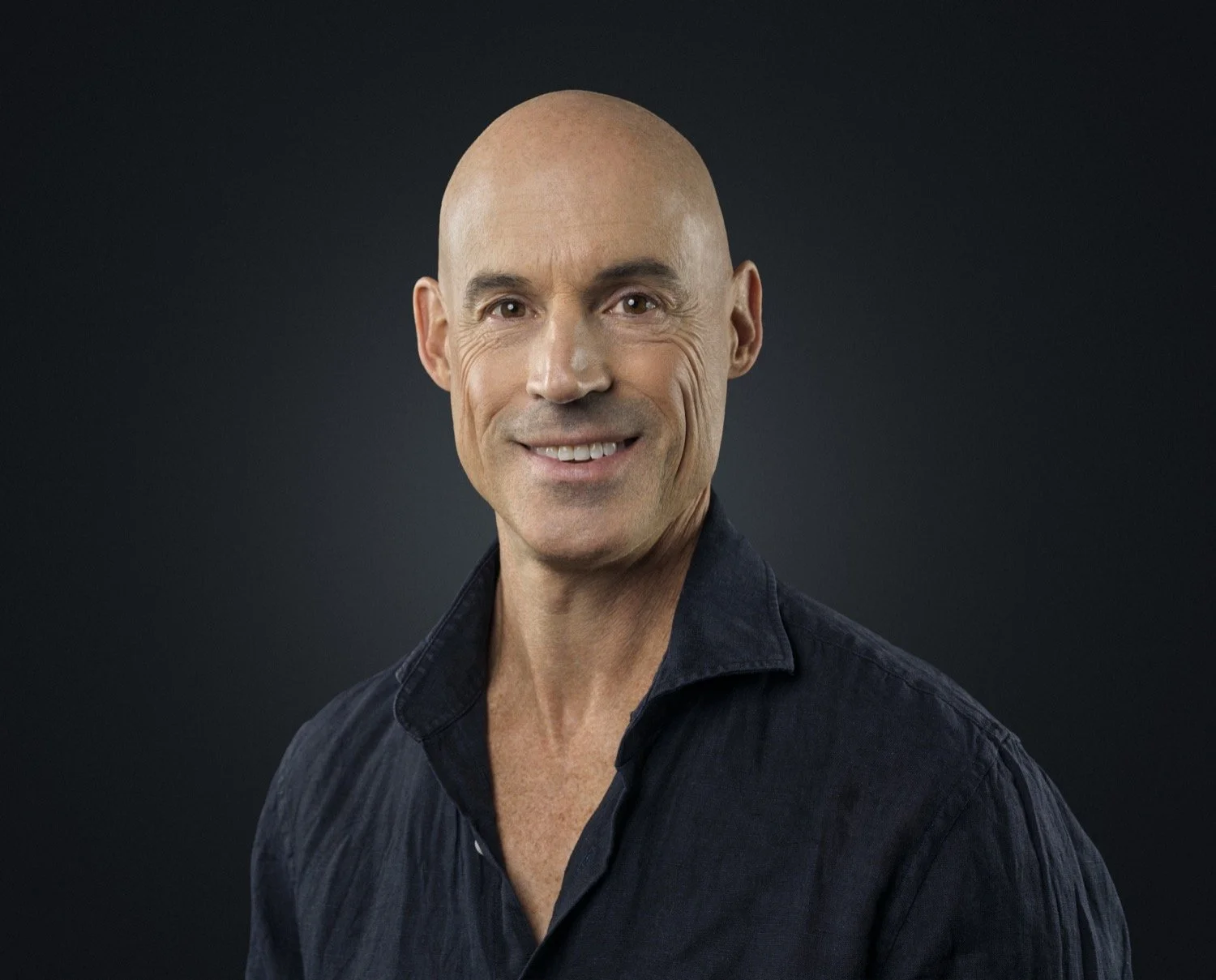
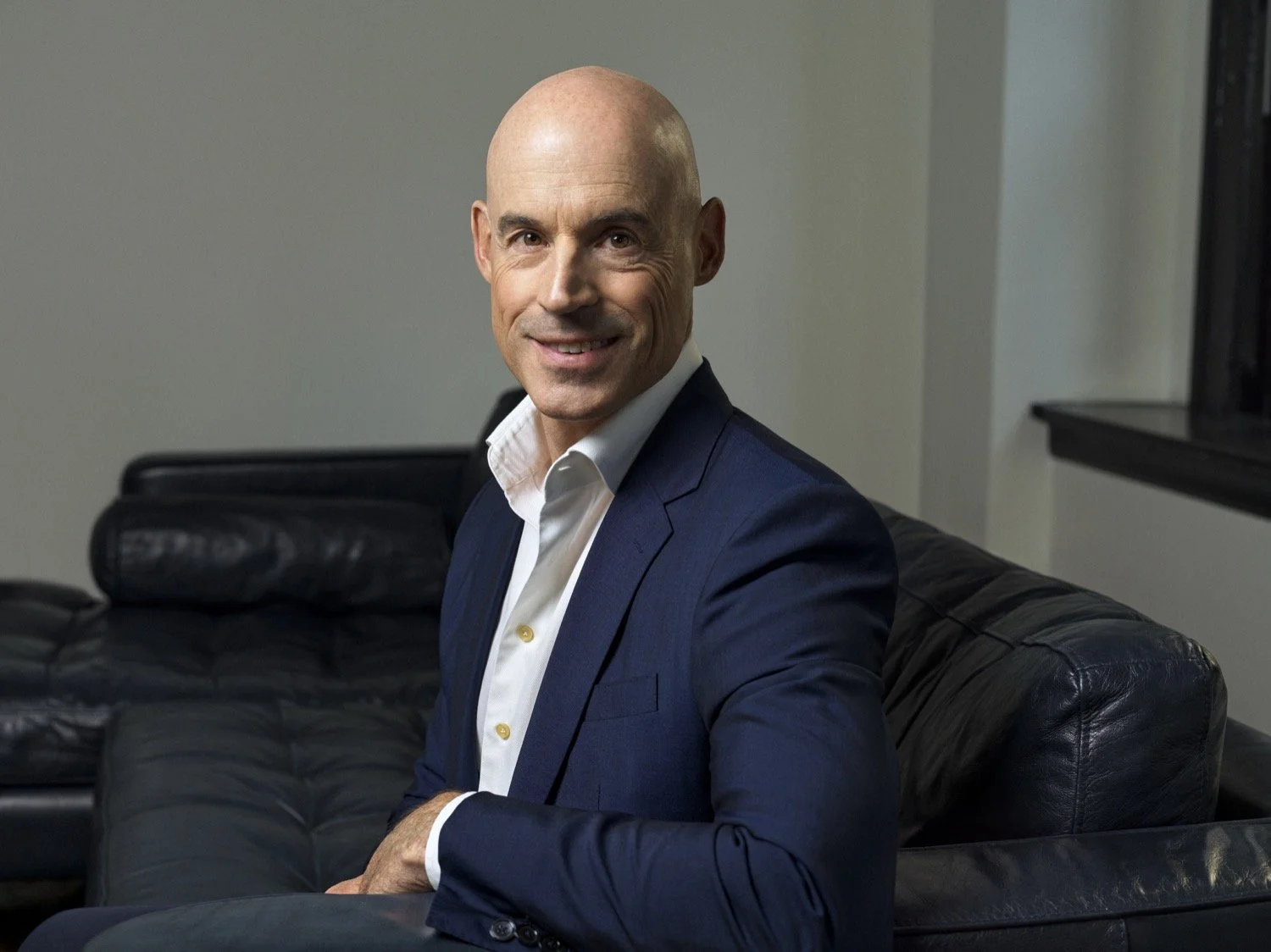
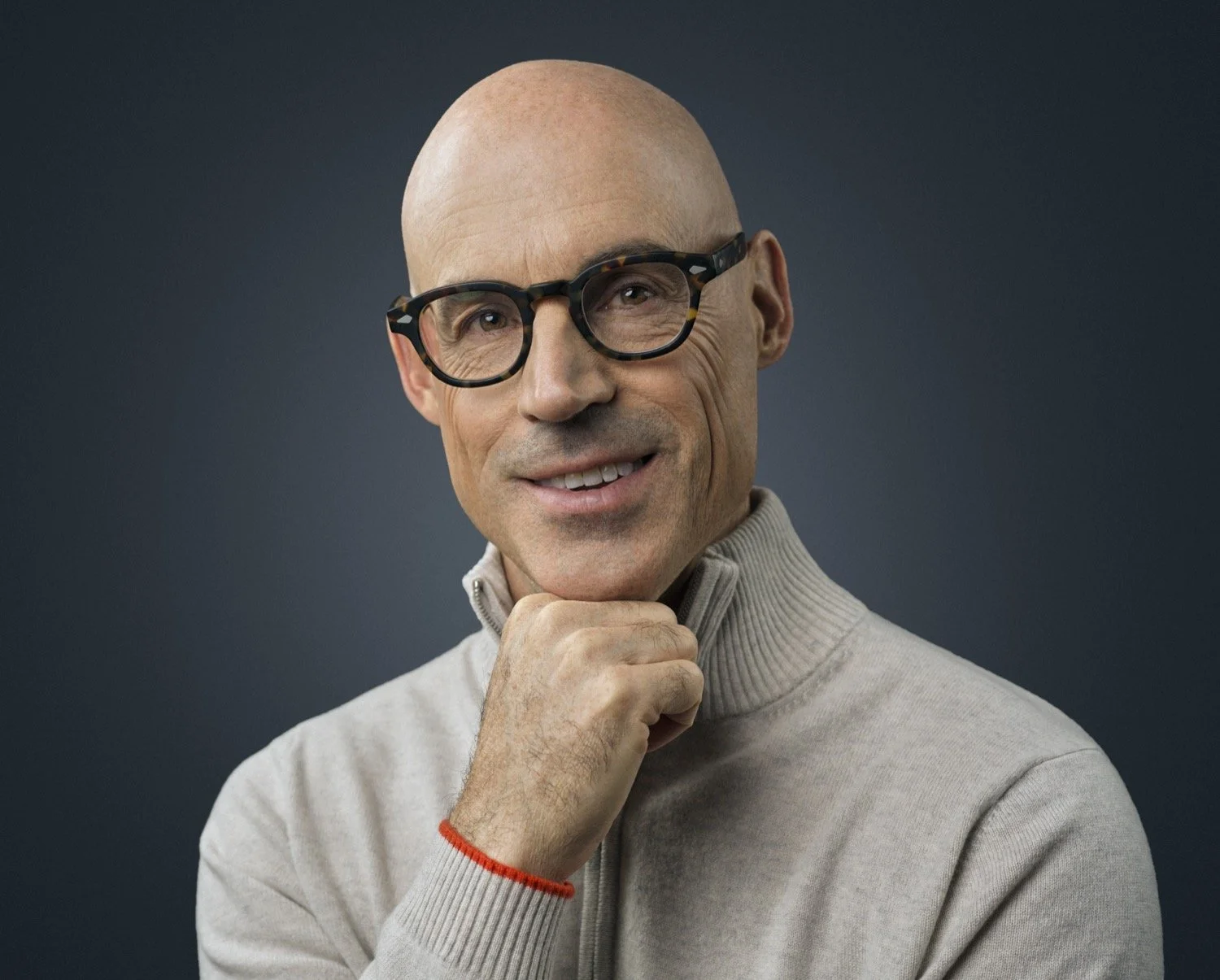
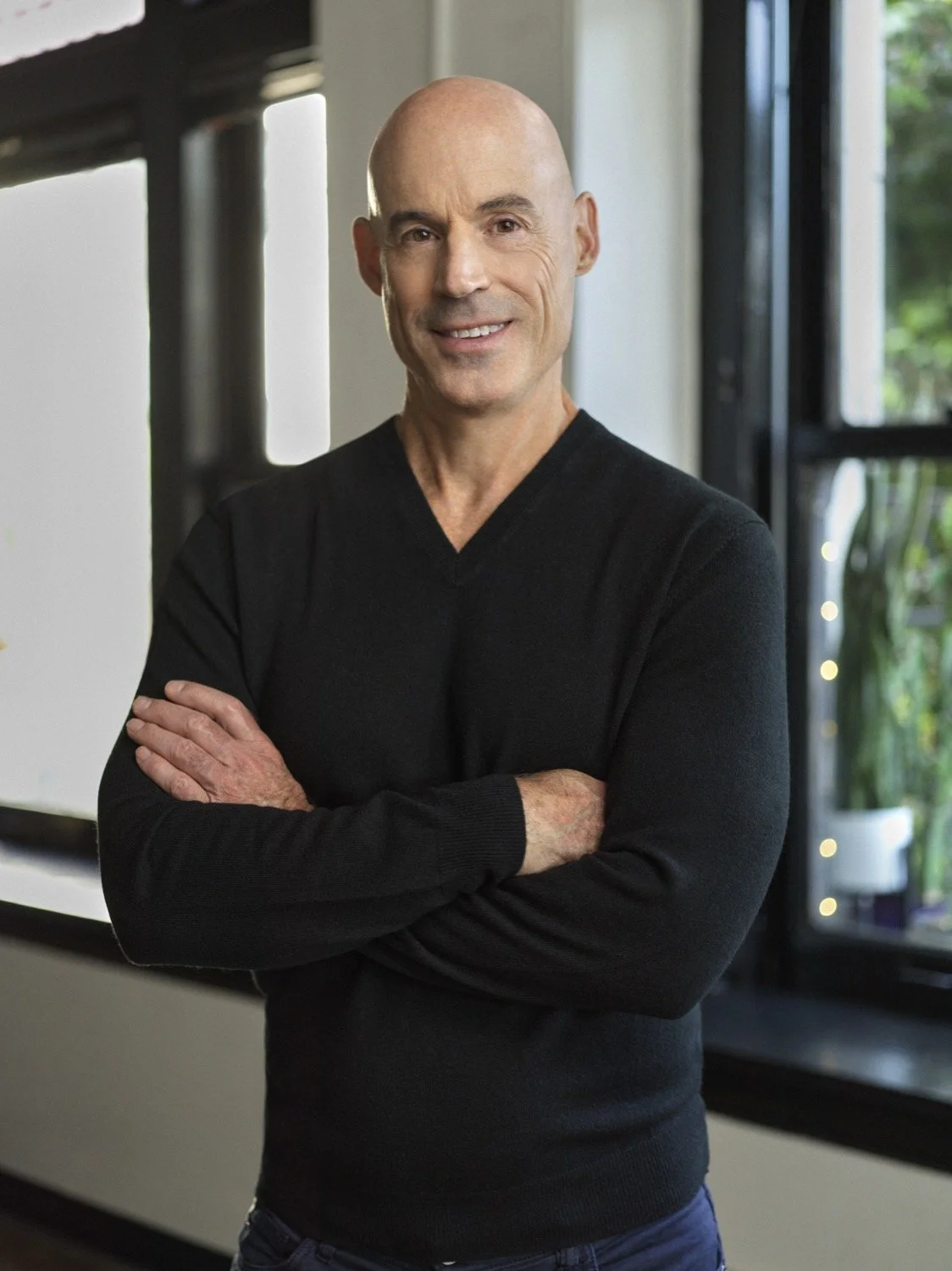
We worked through four looks. It sounds like a lot. It is not, when the same face has to appear on a board page, in a keynote programme, on a fund's website, and in whatever a journalist grabs at short notice.
We began in the room, in daylight, with Bob in a navy suit and an open white shirt against black leather. That is the picture for the biography and the panel programme. It has furniture in it, and air, and it reads as a man in the middle of a working day rather than a man standing in front of a backdrop being photographed.
Then to the window for the standing three-quarter length in the black cashmere, arms folded. Founders need one of these more often than they expect. It is the picture that goes on the website when the website wants to look like a company rather than a directory.
The last two are mine. Dark ground, one light, low and to the side, in the tradition I have used since I started: Holbein, Titian, Rembrandt, Lawrence. The dark linen shirt gives the warm, open version. The black v-neck with the hand to the chin gives the other one, the considered version, which is the one I would put on a governance page or beside an audit committee listing. He wore the pale grey zip-neck and the tortoiseshell glasses for the last frames, and that set is the friendliest of the four without ever slipping into informality.
Four looks, one afternoon, one consistent hand. That is usually the whole ask.
What executives get wrong about wardrobe
Bob arrived with a considered rail, which made the afternoon straightforward, and it is worth saying what made it work. Nothing was new. Everything fitted. The colours ran from navy through charcoal to a single pale grey, so the four sets sit together as one body of work rather than four unrelated appointments. There was no pattern anywhere near the collar, and no shirt so white that it burned out under a hard light.
The mistake I see most often is the sitter who brings one suit and one shirt and expects the photograph to supply the rest of the range. It cannot. Range comes from the rail. My clothing guide is at rorylewis.studio/clothing and I send it to every sitter before the day.
Executive portraits in Los Angeles, New York and London
I photograph executives in three cities. The Los Angeles studio is at 411 S Main Street, Studio 222, in the historic core downtown. New York is at 580 8th Avenue, and London is at 2 Bleeding Heart Yard in Farringdon, a few minutes' walk from Hatton Garden and the City.
The credentials behind the work are the same in each: portraits held in the permanent collection of the National Portrait Gallery in London and in the Royal Collection, sitters including five British Prime Ministers, Field Marshals of the British Army, and Ray Dalio. Chief executives are, on the whole, less guarded than a serving Field Marshal and considerably less pressed for time than a sitting Prime Minister. The method that works for those sitters works very comfortably in a boardroom.
Single portraits, leadership groups of five to twenty, annual report commissions and board photography are all quoted on application. Enquiries go to Alexandra Lewis at AL@rorylewis.studio.