Most of the best things that happen in this trade arrive sideways, by way of a handshake you weren't expecting. This was one of those.
I had been asked to speak at Samy's, here in Los Angeles, on the subject of Godox lighting — a perfectly cheerful evening of light shaping and the usual debates about modifiers, where two photographers can disagree for an hour and both be right. When it was over a gentleman came up, introduced himself, and put a card in my hand. Edward Goldstein. He mentioned, almost in passing, that he did some modelling.
Now, I had the Recreating Caravaggio workshop coming up that weekend at the studio, and I am rarely above a little opportunism. A face like that does not walk into the room twice. I asked whether he might sit for the class. He obliged without much persuasion, which is always the mark of a good sitter — the ones who need convincing tend to need convincing of everything.
The premise of the workshop is straightforward enough: take the principles the Old Masters worked out by candle and oil, and arrive at them with a single light and a great deal of patience. Caravaggio did not have a softbox. He had a window, a dark room, and the nerve to let most of the picture fall away into shadow. We spend the day learning to trust that shadow rather than fill it.
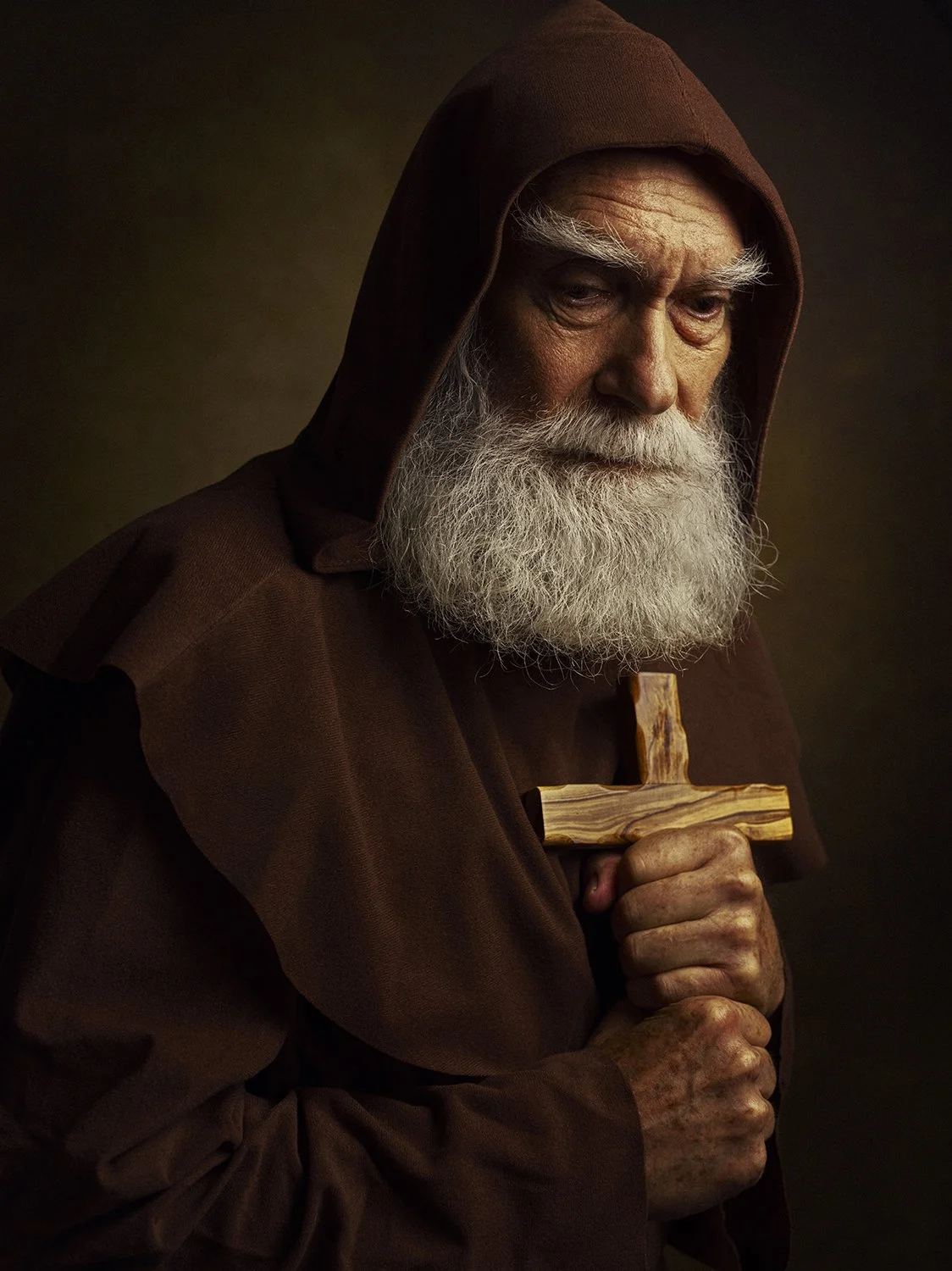
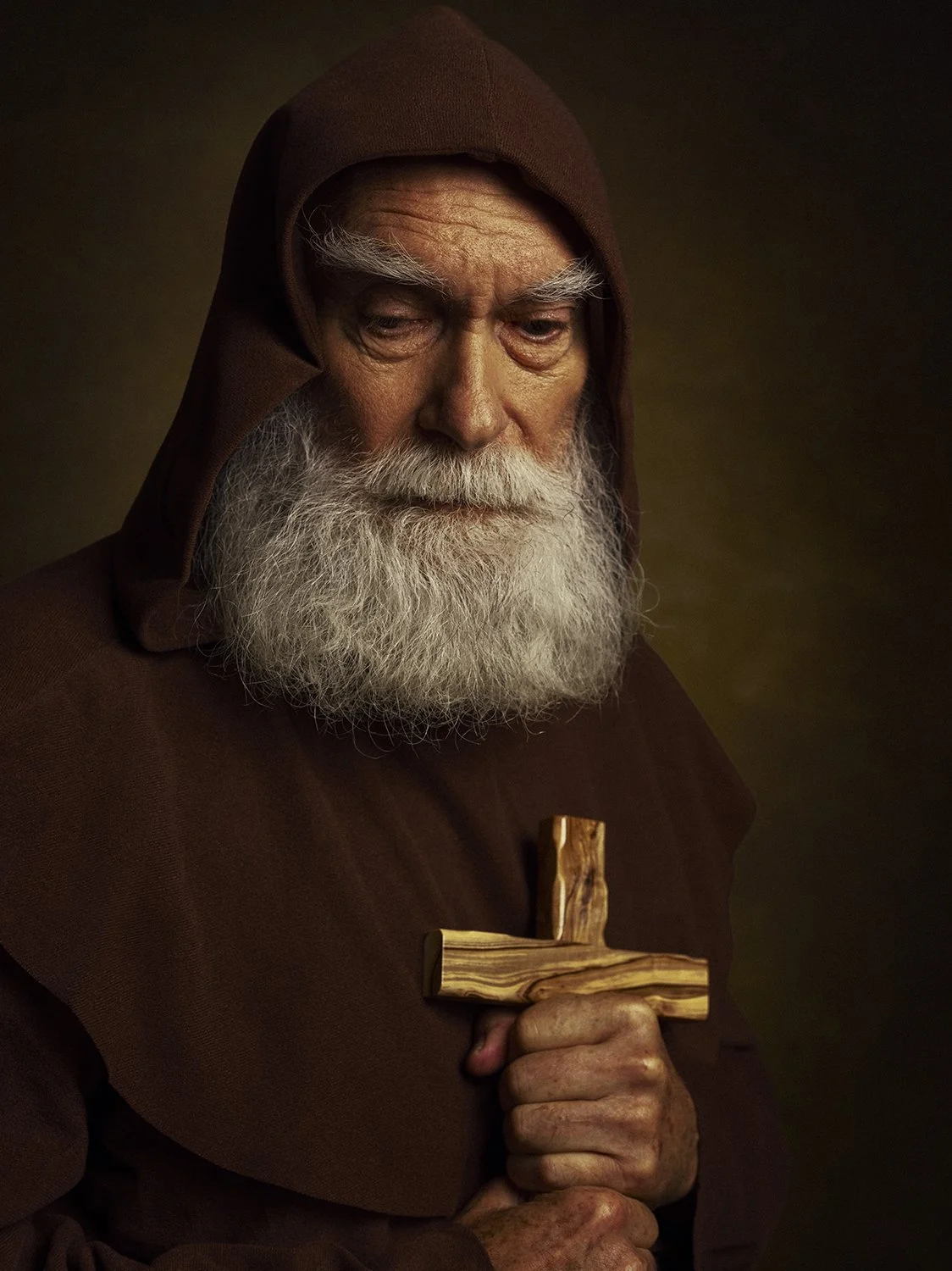
We began with the friar. A coarse brown habit, the hood drawn up, and an olive-wood cross held close to the chest the way men hold a thing they are afraid of losing. Edward gave it a gravity I hadn't directed and couldn't have. There is a particular weather that settles on a face when a man stops performing and simply waits — the students caught it, which was the entire point of the exercise.
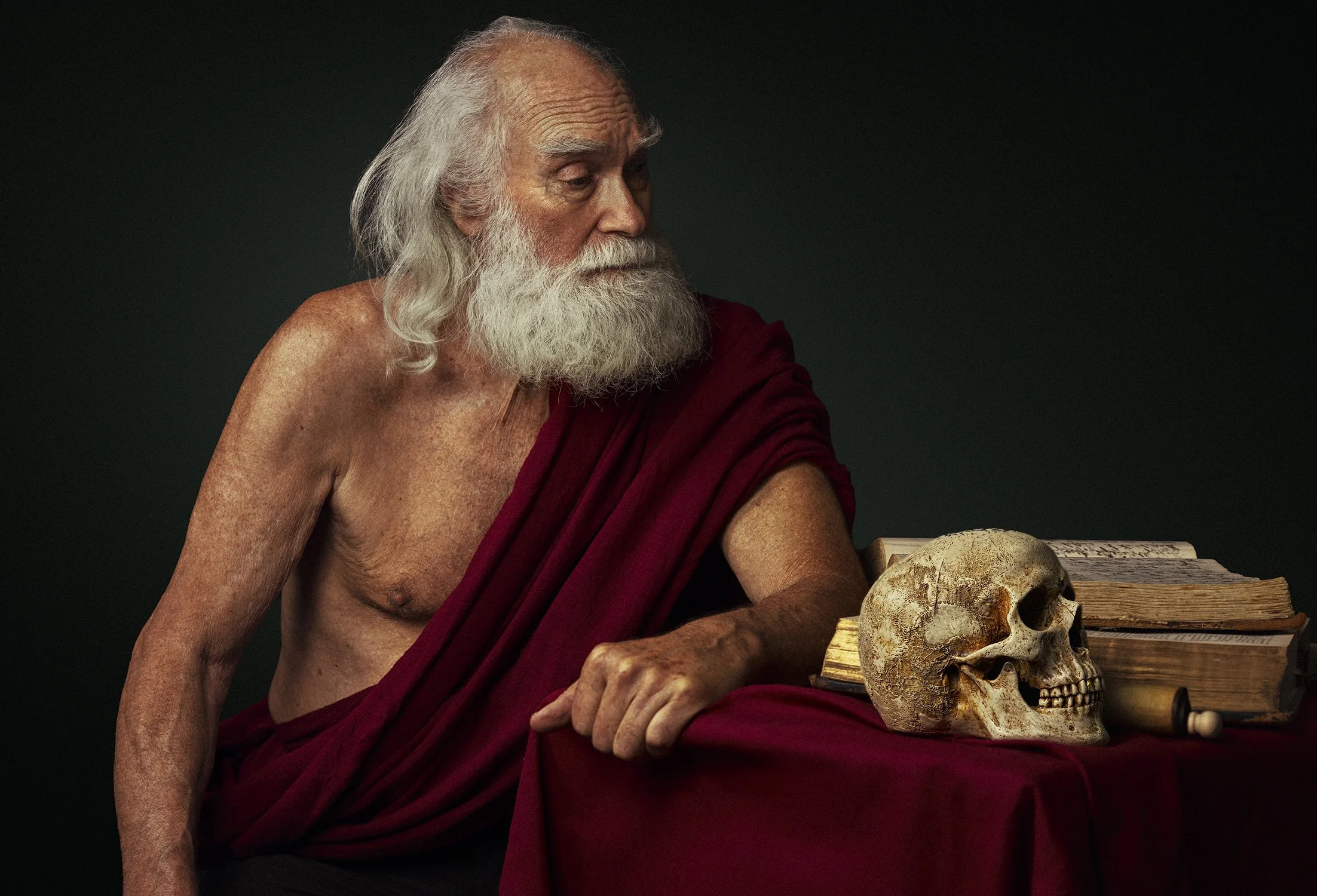
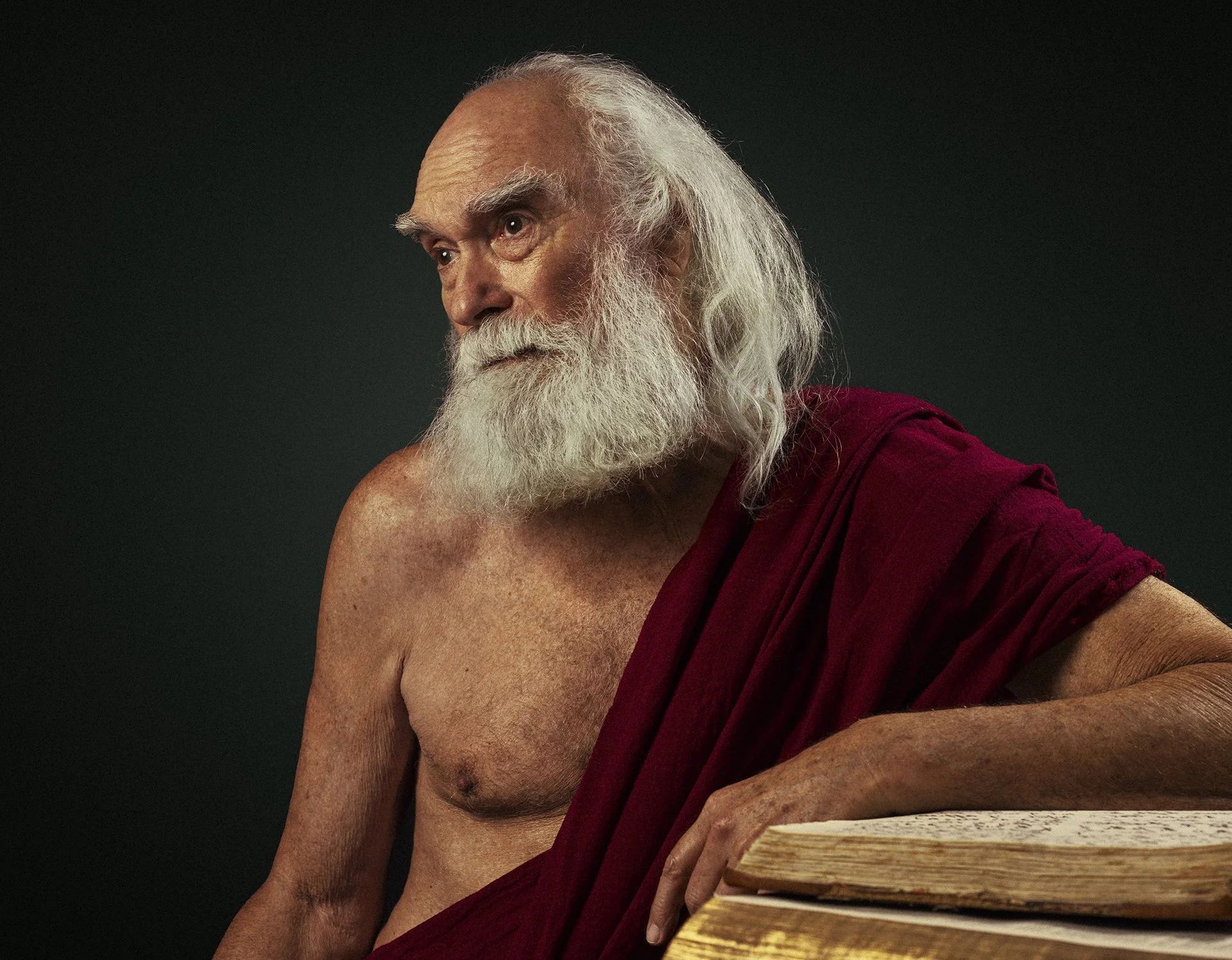
After lunch we changed register entirely and went looking for Saint Jerome. The hermit-scholar of the desert: a deep red drape off one shoulder, a heavy book worn soft at the edges, a scroll, and a skull keeping its patient company on the table. The skull is my own — it has sat for a good many penitents now and never once complained about the long hours.
What I wanted from this set was the thing Ribera and Caravaggio both understood — that the dignity of an old body is not in spite of its age but made entirely of it. The light is allowed to find every year of it. The drape does the rest, that single saturated red doing the work of a whole palette, which is the lesson I most wanted the room to take home.
They turned out well — better than well, if I'm honest, which I try to be only in writing. My thanks to Edward for sitting with such patience, to the students for the good company and sharper questions than I expected, and to a Tuesday evening at Samy's for handing me a sitter I didn't know I was looking for.