The Jotting
It started, as these things sometimes do, in a cinema in Liverpool.
October 25th, 2021. The Everyman. Sasha and I had gone to see Dune — Villeneuve's, the first one — and somewhere between Paul Atreides arriving on Arrakis and the inevitable sandworm, a face appeared on screen that made me lose the plot entirely. Babs Olusanmokun, playing Jamis. He's only there for a few minutes — long enough to fight, lose, and become a memory the rest of the film quietly carries forward — but I sat in the dark cataloguing him instead of following the story. The angle of the cheekbone. The line of the jaw in profile. The stillness of him. There's a particular kind of face the European portrait tradition keeps reaching for: structurally certain, quiet, the sort of face that holds a frame without working at it. Babs has one of those faces.
I left the cinema with a half-formed intention to photograph him and, like most half-formed intentions, it got buried under a working diary and three time zones.
Then in 2022 he turned up again, this time as Dr. Joseph M'Benga in Star Trek: Strange New Worlds, and the face hadn't moved. Same architecture, same gravity. Photographers tend to keep mental files of people they'd like to sit, and Babs's file had been sitting near the top of the cabinet for a year, gathering dust and patience in equal measure. By the time Dune: Part Two came round and Guy Ritchie cast him in The Ministry of Ungentlemanly Warfare, the file was practically waving at me.
So this April, on a working trip back to London, I wrote to his agent.
He was in town. He was free. We met at the Farringdon studio on the 24th — five years almost to the week since that first evening at the Everyman.
Worth saying something about Babs as a sitter, because the face was only ever the front door.
Born in Lagos. Based in New York. Fluent in English, French, Yoruba and Portuguese. A third-degree Brazilian jiu-jitsu black belt — which, if you've ever tried to direct an actor who carries themselves like an athlete, you'll know is its own quiet advantage in front of a camera. He arrives in a room already settled in himself. There's no wasted motion, nothing performative, none of the small adjustments most sitters make when they realise they're being looked at. He simply isthere, which is the rarest thing a portraitist can ask for.
We talked, mostly. About Lagos. About the long road from his early television work — Law & Order, Roots, The Defenders, Black Mirror — to the slower, more deliberate roles that have come since. About Dune, briefly, because I owed him an admission. About Caravaggio, more than briefly, because I was preparing for a workshop and the conversation drifted there. There's a particular kind of actor whose presence on a call sheet tells you the film has been thought about properly, and Babs is one of them. The portraits came easily after that, which is usually a sign the conversation has already done most of the work.
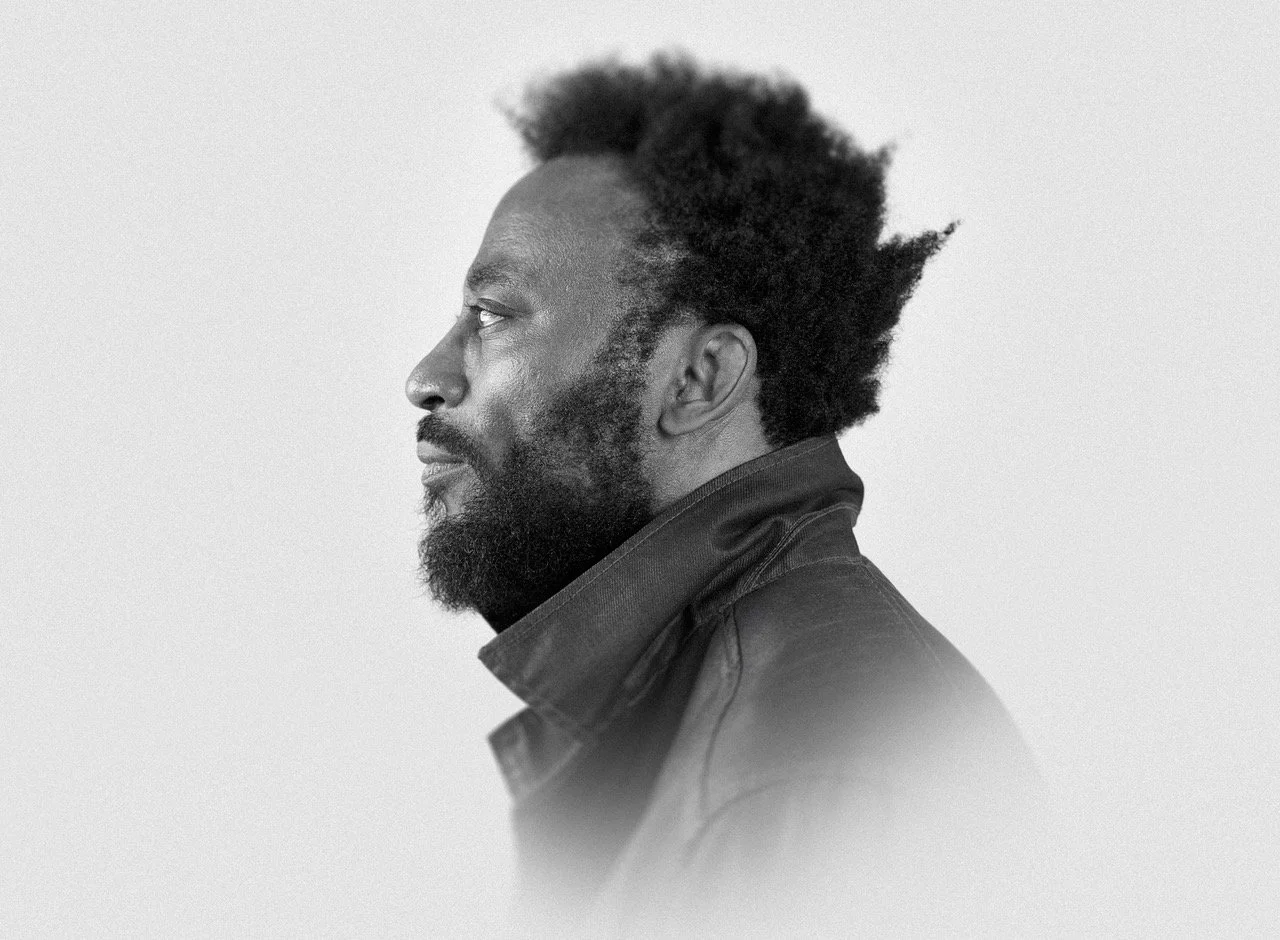
Five Years Late: Portraits of Babs Olusanmokun (Rory Lewis Photographer London 2026)
The first frame is the one I'd been carrying since 2021. Strict profile, high-key ground, the silhouette doing all the talking. It's the picture the cinema put in my head. George Dawe would have understood it — although Dawe would have wanted half a yard of braided wool somewhere — and so would the engravers who used to work this kind of profile up for the print rooms of the early nineteenth century. I wanted nothing in the frame except the line of him.
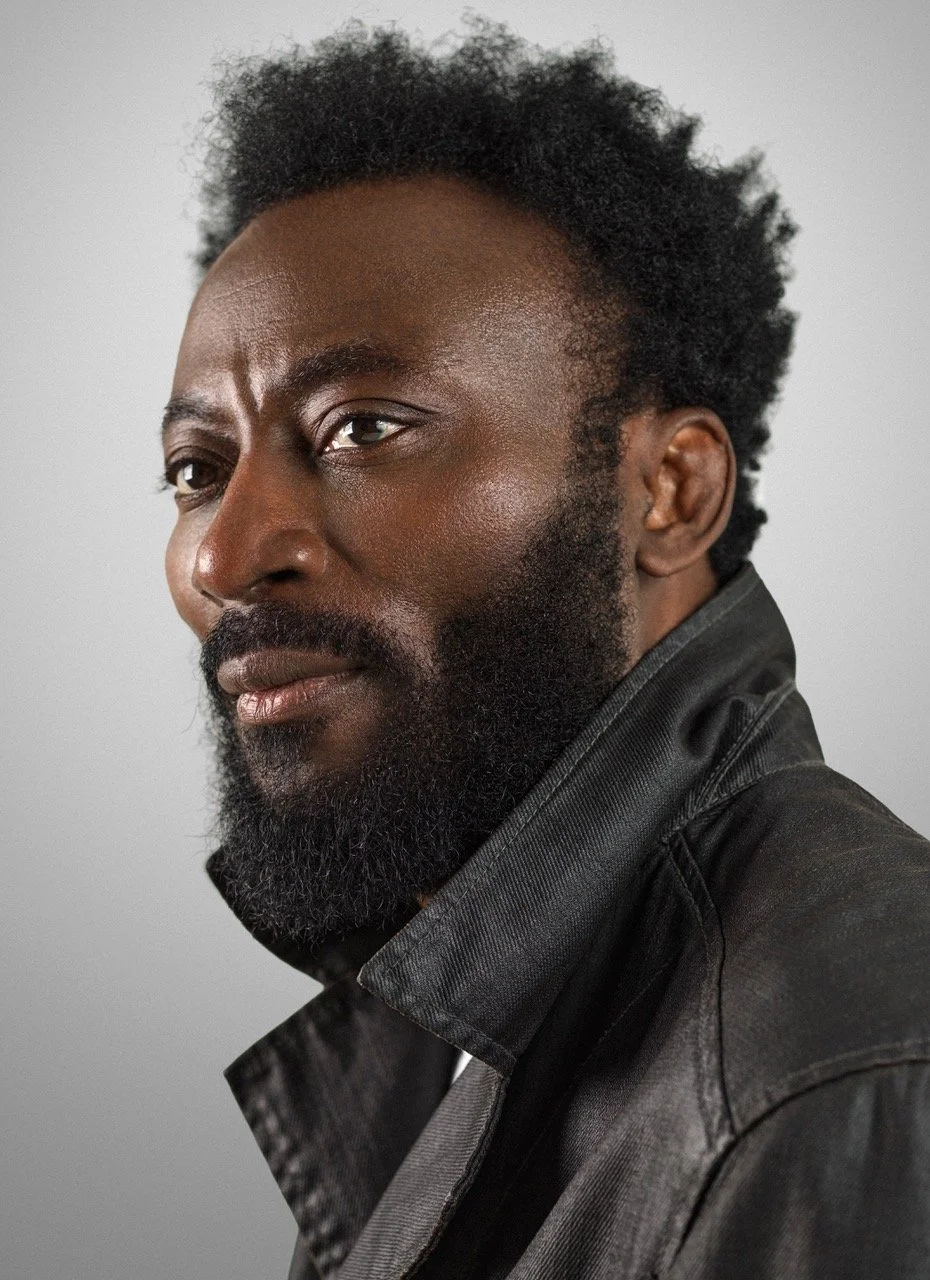
Five Years Late: Portraits of Babs Olusanmokun (Rory Lewis Photographer London 2026)
The second is the working portrait — a half-turn, soft fill on the shadow side, the leather collar catching just enough texture to keep the image honest. This is the frame for the agent's wall, the casting page, the press shot. The face does what it does best: holds your eye without performing for it.
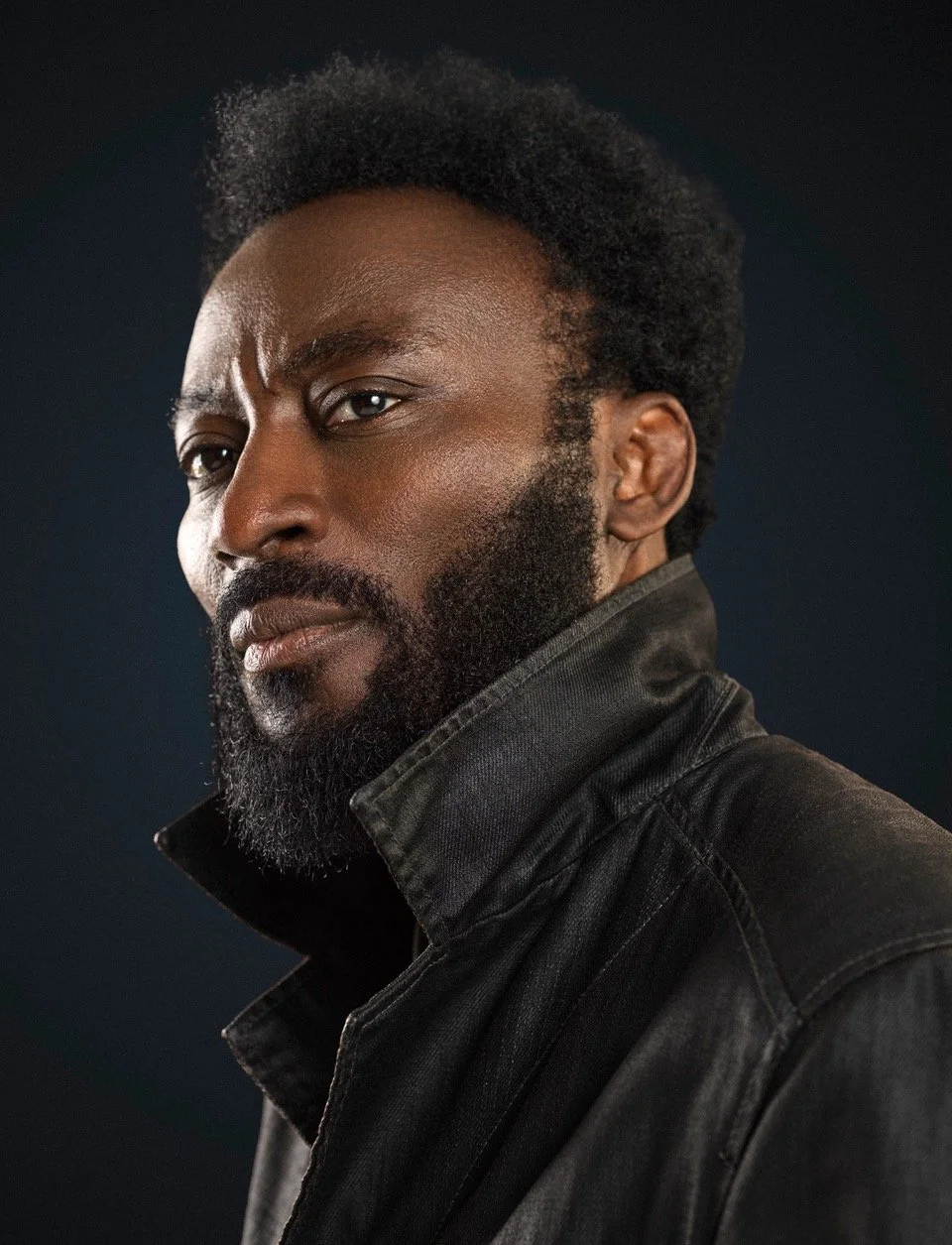
Five Years Late: Portraits of Babs Olusanmokun (Rory Lewis Photographer London 2026)
The third is the one I made for myself. Tenebrist ground, single key, the shadow allowed to do its work. Closer to the language I keep returning to in the Soldati della Repubblica series and in the British military portraits before it — Caravaggio rather than the casting director, the Old Master rather than the headshot. There's a moment in a sitting when the room quiets down and the sitter stops being a name on a call sheet and becomes a face under a single light. This is that frame.
The thing about waiting five years for a face is that you have time to think about what you'd actually do with it. Most of my working life — between the Downtown Los Angeles studio, the Midtown Manhattan rooms, and the Farringdon studio I keep coming back to — is spent making portraits at speed, often in two-hour windows between flights. Babs was a useful corrective. Some sittings are worth the long approach.
He flies back to New York this week. I fly back to Los Angeles on Friday. With any luck, our paths will cross again — there's another portrait I have in mind for him, and I'd rather not wait until 2031 to make it.
— RL, London, April 2026