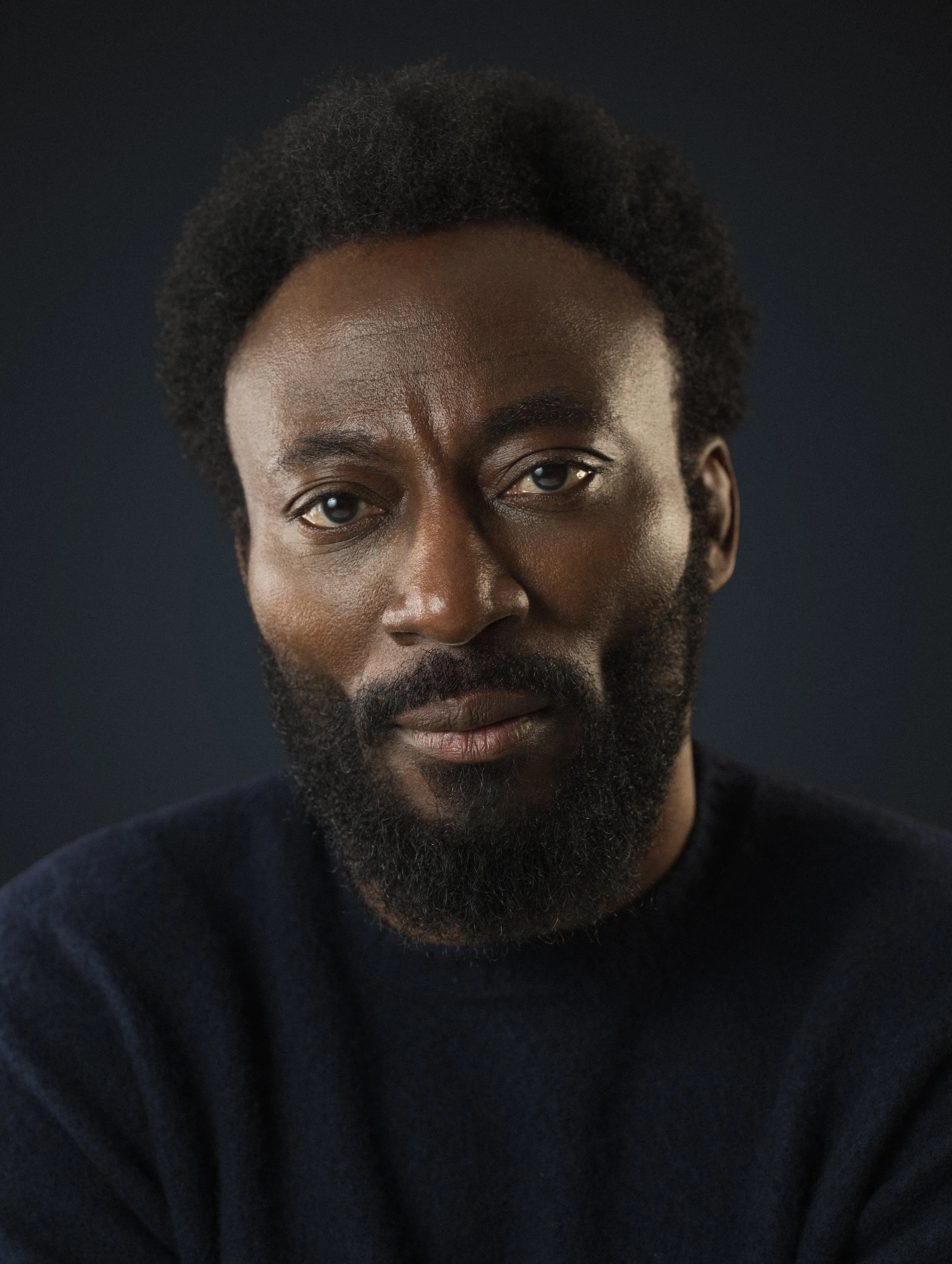
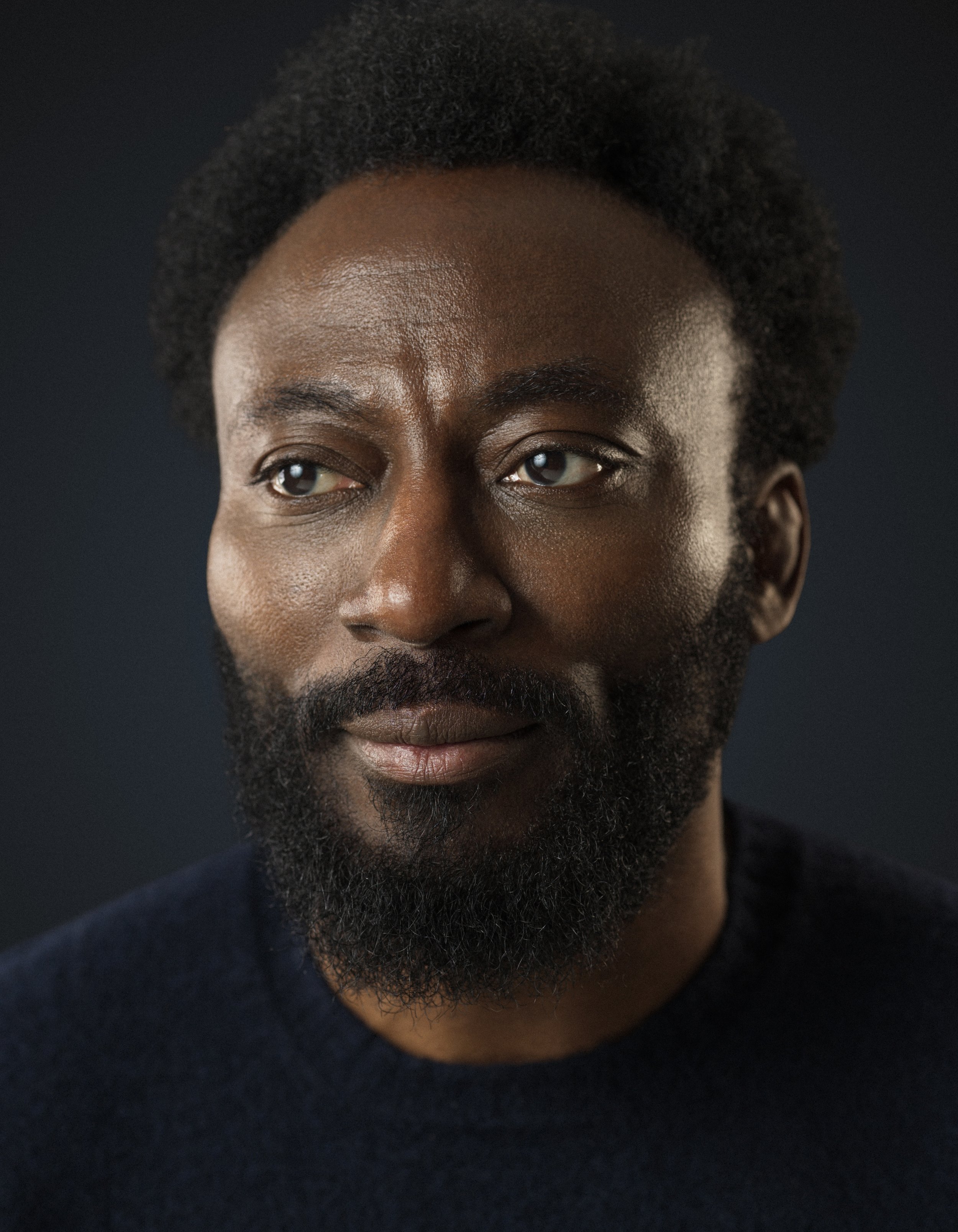
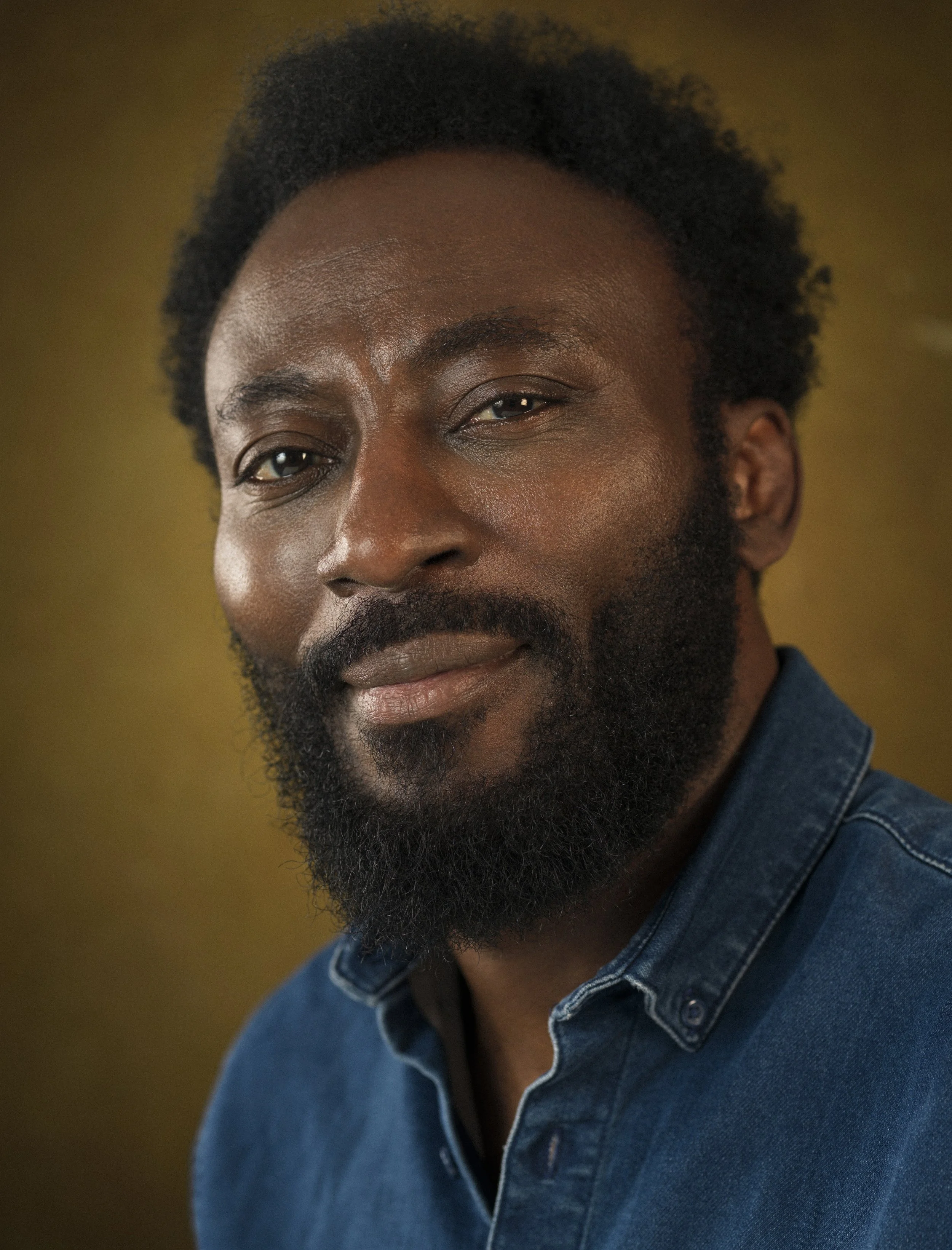
I had the privilege this week of photographing Babs Olusanmokun in my London studio, and as I worked I found myself thinking, not for the first time, about how often I get to say that word — privilege — about the Black actors who find their way to my chair.
Because here is something I have heard again and again, from African American and Black British actors alike: how hard it is to find a photographer who can actually render them. Not photograph them — anyone can trip a shutter — but render them. See the architecture of the face, the planes of the cheek, the light moving across deep skin, and translate all of it into a portrait that is true. Too many of them have sat for headshots that flattened them into silhouette, or blew the highlights, or simply handed back something generic and lit for someone else's skin. They arrive at my studio a little wary, having been let down before. And then they relax, because they can feel that I am paying attention to them.
That trust is the privilege. I do not take it lightly.
Babs is, of course, an extraordinary subject — Jamis in Denis Villeneuve'sDune and Dune: Part Two, Dr. M'Benga in Star Trek: Strange New Worlds, the chilling turn in Black Mirror's "Black Museum," Asher in The Book of Clarence. A Nigerian-born actor who carries real gravity into every frame, and a Brazilian jiu-jitsu black belt besides, which I think is why he understands stillness the way he does: as a held, active thing rather than an absence. You do not coax a performance out of a man like this. You wait, you light carefully, and you let the camera find what is already there.
I worked him across three grounds. Against the slate, in the navy knit, I raked the light low and warm across one side and let the other fall into deliberate shadow — pure tenebrism, the Caravaggio register, and proof that you can carry deep skin into near-darkness and still hold every contour if you respect it enough. Then the ochre ground with the denim shirt, where I was reaching for the warm grounds the old masters laid down before a single brushstroke — the colour that makes skin of African descent glow rather than merely register. That is my favourite of the set: the faint beginning of a smile, an amusement behind the eyes, the gold behind him conferring an authority no white seamless ever could. The third, back on the darker ground, is the most frontal and unhurried — a level gaze straight down the lens, every plane of the face modelled and intact.
None of this is complicated to want. It is only difficult to do, and the doing is a craft I have spent twenty-three years on. The faces of the African diaspora deserve to be lit with the same reverence the old masters gave their subjects — and I consider it part of my job, and frankly part of my responsibility, to make sure they are. That so many of these actors now seek me out tells me two things: that I am doing something right, and that the gap they were trying to fill was real and shamefully wide.
Babs joins an archive that already holds a constellation of Star Trekprincipals and some of the most recognisable faces in the world. He sits comfortably among the best of them. But more than the credit, I am grateful for the afternoon — for the quiet, for the trust, and for the reminder of why I do this at all.
It is a privilege to be the photographer these actors can finally relax in front of. I intend to keep earning it.